Tuesday, September 3, 2019

Condolences, prayers and promises are not the solutions to gun violence and mass shootings


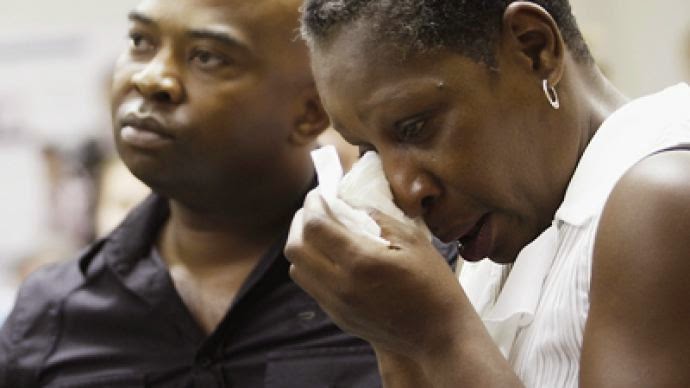
President Obama makes emotional eulogy at Senator Pinckney's funeral. It was the day he sang "Amazing Grace", surprising every one at the funeral.
“For too long, we've been blind to the unique mayhem that gun violence inflicts upon this nation. (Applause.) Sporadically, our eyes are open: When eight of our brothers and sisters are cut down in a church basement, 12 in a movie theater, 26 in an elementary school. But I hope we also see the 30 precious lives cut short by gun violence in this country every single day; the countless more whose lives are forever changed -- the survivors crippled, the children traumatized and fearful every day as they walk to school, the husband who will never feel his wife's warm touch, the entire communities whose grief overflows every time they have to watch what happened to them happen to some other place.

“The vast majority of Americans -- the majority of gun owners -- want to do something about this. We see that now. (Applause) And I'm convinced that by acknowledging the pain and loss of others, even as we respect the traditions and ways of life that make up this beloved country -- by making the moral choice to change, we express God's grace”. (Applause.) President Barack Obama speaking at Senator Clementa Pinckney’s funeral.

Startling gun stats for 2019

During George Bush’s presidency there were 16 mass shootings from 2000 to 2008. Such shootings happened under former presidents Ronald Reagan and Bill Clinton. President Barack Obama was greeted four months into his presidency with four mass shootings. Before he left office the President had spoken out about 15 different mass shootings. Clinton, Reagan and Bush were somewhat subdued about shootings on their watch. 

Mother Jones magazine (Guide to Mass Shootings in America) has a listing of mass shootings in America from 1982 to 2019 and counting. Gun Violence Archive 2019 has collected stats relating to gun incidents, deaths and violence.

“In 1994, the Republicans reclaimed the House of Representatives for the first time in 40 years. The key factor in the major Democratic loss pointed to the federal assault weapons ban that was passed by Congress on September 13, 1994. A part of the Violent Crime Control and Law Enforcement Act, the assault weapons ban banned semiautomatic weapons from having two or more military features and placed a ten-year ban on the sale of assault weapons and large ammunition magazines. The ’94 election was significant because gun control became a deciding factor in the election and wedged two ideologically distant parties further apart”. (NBC News) Congress did not renew the ban upon its expiration September 2004.

When President Barack Obama talked about sensible gun reform or stricter regulations—not to be confused with taking a citizen’s gun or arsenal of guns—he was rebuffed by gun loving Americans, Democrats, gun dealers and sellers, the National Rifle Association (NRA) and all Republicans. Republicans, in spreading a pack of lies, postured that President Obama was going to send government agents to citizen’s homes to snatch their guns and ammunition. Some disillusioned Americans with stockpiles of guns and ammunition said they were ready to engage in a gun battle with the government if it attempted to physically confiscate their guns.

Obama was the best salesman the gun business ever had

Turns out President Barack Obama was the best salesman that the NRA, gun and ammunition sellers ever had. He did not apply for the job. It was automatically bestowed on him. From 2008 to 2016 gun and ammunition sales shot through the roof (excuse the pun) in Virginia. Around 3,153,000 guns were sold. During Republican George Bush’s presidency, the state sold a mere 1,713,000 guns. There was no apparent fear among Republicans and gun lovers that Bush would confiscate their guns.

Newsweek Magazine, 2016, wrote, “President Obama became known as America’s gun salesman-in-chief during his final years in office”. An estimated $29.1 billion in firearms and $16.6 in ammunition were sold during his eight years in office. The purchases were panic buying as encouraged by the NRA and Republicans. Around $21.1 billion in gun sales and $22.1 billion in ammunition sales were realized under both Presidents Bill Clinton and George Bush.

In 2016 the gun industry published a report stating that it grew158 percent when Barack Obama was elected. The job market in the gun and ammunition industry also changed. Employment rose from 166,000 to 288,000 to handle the volume of business. Still the lies remained the same: President Obama was a serious threat the Second Amendment, and he was going to take their guns.

In 2016 the gun industry published a report stating that it grew158 percent when Barack Obama was elected. The job market in the gun and ammunition industry also changed. Employment rose from 166,000 to 288,000 to handle the volume of business. Still the lies remained the same: President Obama was a serious threat the Second Amendment, and he was going to take their guns.

With the election of Donald Trump as president, however, gun and ammunition sales dropped by 17 percent. His election made Republicans and the NRA less fearful of stronger regulations, and tougher gun reform laws. Trump was the first president to address the NRA, an organization he fears. In a boastful speech at a NRA conference, Trump told members: “You have a friend and champion in the White House”. Trump’s campaign received more money from the National Rifle Association than any presidential candidate in history. NRA’s Chris Cox, executive director, proclaimed in 2016 that the organization would target any member or members perceived as interfering with their right to own guns.

The media, concerned Americans and Democrats thought after the August 3, 2019, El Paso, Texas mass shooting (22 dead, 26 injured); and the August 4, 2019, Dayton, Ohio mass shooting (nine dead, 27 injured), Trump would hurriedly present Congress with a proposal to lessen gun violence via gun reform and stricter background checks

Newspaper headlines suggested that Trump is still too scared to buck the NRA. “Donald Trump falls back into line with NRA, blaming mass shootings on mental problems rather than access to assault rifles” (The Australian); “Donald Trump shifts on gun background checks after mass shootings” (Politifact); “Trump blames mass shootings on mentally ill” (Reuters); “Trump blames mass shootings on mentally ill, call for more mental institutions” (Yahoo).

President Donald Trump met with Marjory Stoneman students and families at the White House. He promised to make changes in school shootings and gun violence.
Noticeably, Trump does not respond to mass shootings the way Americans expect him to. Observing his actions, Comforter-in-Chief does not come to mind. Trump preferred not to hold a press conference after the June 12, 2016, Orlando, Florida night club shooting that left 49 dead, 53 with various injuries. Instead, he tweeted: “Appreciate the congrats for being right on radical Islamic terrorism. I don’t want congrats, I want toughness & vigilance. We must be smart”! He made himself the focus in the tragedy and being right about “Islamic terrorism.”

The October 1, 2017, Las Vegas, Nevada massacre left 58 dead and an estimated 546 injured. Trump wrote another generic, impersonal tweet. “My warmest condolences and sympathies to the victims and families of the terrible Las Vegas shootings. God bless you”. He attended no vigils. Attended no memorials. Made no public speeches. Made no hospital visits.

After the February 14, 2018, mass shooting at Marjory Stoneman Douglas High School in Parkland, Florida, Trump said school personnel should be armed. He said had he been a security guard at the school he would have stormed the building to take out the shooter. There were 17 fatalities at Marjory Stoneman. The usual grief messages were sent to the victims and families. Students sent word to politicians in Washington that they did not want any more condolences and prayers. They wanted action on gun control.

President Obama as preacher and comforter

According to the FBI a mass shooting occurs when four or more people are killed by one person. On June 17, 2015, a 21 years-old white supremacist wannabe shot and killed eight church members in Charleston, South Carolina. In his “manifesto” rant he said he was angry at Black people; Black men were raping White women; Blacks were trying to take over America. During the Bible study class, a church member opened the door for the young killer, not knowing their time on earth was about to end. He chose Emanuel AME because it is the oldest Black church in South Carolina and the most recognized.

The shooter was welcomed to study with them. He sat with them for an hour before repaying their kindness by shooting them to death. He left one church member alive, instructing her to record what she had witnessed. The shooter was captured hours later. He did not attempt to commit suicide. A cop bought the shooter a hamburger and fries because he was hungry. Despite having a drug charge on his record, he was able to purchase a weapon.

The most memorable speeches made by President Obama were delivered after the Sandy Hook Elementary School massacre; and the eulogy he delivered at the funeral of Clementa Pinckney. That day he was the Comforter-in-Chief, President of the United States and guest pastor at Emanuel AME. He was comfortable in the pulpit as he delivered the eulogy with the cadence and passion of a seasoned preacher. That was the day he sang “Amazing Grace”, surprising pastors and thousands attending the funeral.

"Michelle and I know several members of Emanuel AME Church. We knew their pastor, Reverend Clementa Pinckney, who, along with eight others, gathered in prayer and fellowship and was murdered last night. And to say our thoughts and prayers are with them and their families and their community doesn't say enough to convey the heartache and the sadness and the anger that we feel.

“Any death of this sort is a tragedy. Any shooting involving multiple victims is a tragedy. There is something particularly heartbreaking about the death happening in a place in which we seek solace, and we seek peace, in a place of worship. We don't have all the facts, but we do know that, once again, innocent people were killed in part because someone who wanted to inflict harm had no trouble getting their hands on a gun".

By 2013 President Obama had signed 23 executive orders and proposed 12 Congressional actions to regulate gun control. During his Sandy Hook speech President Obama said at the White House, “We can’t tolerate this anymore. The tragedies must end. And to end them we must change. We will be told that the causes of such violence are complex, and that is true. 

No single law—no set of laws can eliminate evil from the world or prevent every senseless act of violence in our society. But that can’t be an excuse for inaction. Surely, we can do better than this”.

Determination to cripple gun violence

President Obama was up for re-election in 2012. His goal was to plow ahead with his determination to cripple gun violence in America. His plan included focusing on mental health treatment for those perceived as a threat, limit magazine sizes, tighten background checks, initiate or restart gun research. A couple of years later--2014—the President proposed that medical histories be included in background checks.

But no matter what President Obama proposed Republicans said no, citing an overused, hackneyed excuse that common sense reforms such as background checks wouldn’t have stopped the Sandy Hook, or any other mass shootings. The best solution was to leave things alone and put a gun in every hand in America. The NRA asserted, religiously, that the only way to beat a bad guy with a gun is to arm a good guy with a gun.

Senate Majority Leader Mitch McConnell let President Obama know early on that he would stop, stall or thwart whatever he attempted to negotiate. “We are just gonna oppose whatever the President offer even in the midst of crisis, because if he obtained any bipartisan support that would strengthen him politically”. Retaining power was/is more important than addressing the seriousness of gun violence and reform.

April 17, 2013, a bipartisan proposal requiring background checks for would be gun owners and banning sales of some military style semi-automatic weapons was cut off at the knees by Democrats who controlled the Senate. The vote was 54 to 46. Sixty votes were needed. The Joe Manchin (D) and Republican Pat Toomey proposal created after the Newton school massacre failed to get the 60 votes needed to pass. Lawmakers introduced more than 100-gun reform proposals in Congress in 2016. Only a few made it to the Senate floor.

“New executive actions to reduce gun violence and make our communities safer”

President Barack Obama and Vice President Joe Biden are committed to using every tool at the Administration’s disposal to reduce gun violence. Some of the gaps in our country’s gun laws can only be fixed through legislation, which is why President Obama continues to call on Congress to pass the kind of commonsense gun safety reforms supported by a majority of the American people. And while Congress has repeatedly failed to take action and pass laws that would expand background checks and reduce gun violence, today, building on the significant steps that have already been taken over the past several years, the Administration is announcing a series of commonsense executive actions designed to:

1. Keep guns out of the wrong hands through background checks.

The Bureau of Alcohol, Tobacco, Firearms and Explosives (ATF) is making clear that it doesn’t matter where you conduct your business—from a store, at gun shows, or over the Internet: If you’re in the business of selling firearms, you must get a license and conduct background checks.

ATF is finalizing a rule to require background checks for people trying to buy some of the most dangerous weapons and other items through a trust, corporation, or other legal entity.

Attorney General Loretta E. Lynch has sent a letter to States highlighting the importance of receiving complete criminal history records and criminal dispositions, information on persons disqualified because of a mental illness, and qualifying crimes of domestic violence.

The Federal Bureau of Investigation (FBI) is overhauling the background check system to make it more effective and efficient. The envisioned improvements include processing background checks 24 hours a day, 7 days a week, and improving notification of local authorities when certain prohibited persons unlawfully attempt to buy a gun. The FBI will hire more than 230 additional examiners and other staff to help process these background checks.

2. Make our communities safer from gun violence.

The Attorney General convened a call with U.S. Attorneys around the country to direct federal prosecutors to continue to focus on smart and effective enforcement of our gun laws. The President’s FY2017 budget will include funding for 200 new ATF agents and investigators to help enforce our gun laws.

ATF has established an Internet Investigation Center to track illegal online firearms trafficking and is dedicating $4 million and additional personnel to enhance the National Integrated Ballistics Information Network. ATF is finalizing a rule to ensure that dealers who ship firearms notify law enforcement if their guns are lost or stolen in transit. The Attorney General issued a memo encouraging every U.S. Attorney’s Office to renew domestic violence outreach efforts.

3. Increase mental health treatment and reporting to the background check system.

The Administration is proposing a new $500 million investment to increase access to mental health care. The Social Security Administration has indicated that it will begin the rulemaking process to include information in the background check system about beneficiaries who are prohibited from possessing a firearm for mental health reasons. The Department of Health and Human Services is finalizing a rule to remove unnecessary legal barriers preventing States from reporting relevant information about people prohibited from possessing a gun for specific mental health reasons.

4. Shape the future of gun safety technology.    

The President has directed the Departments of Defense, Justice, and Homeland Security to conduct or sponsor research into gun safety technology. The President has also directed the departments to review the availability of smart gun technology on a regular basis, and to explore potential ways to further its use and development to more broadly improve gun safety.

Congress should support the President’s request for resources for 200 new ATF agents and investigators to help enforce our gun laws, as well as a new $500 million investment to address mental health issues. Because we all must do our part to keep our communities safe, the Administration is also calling on States and local governments to do all they can to keep guns out of the wrong hands and reduce gun violence. 

It is also calling on private-sector leaders to follow the lead of other businesses that have taken voluntary steps to make it harder for dangerous individuals to get their hands on a gun. In the coming weeks, the Administration will engage with manufacturers, retailers, and other private-sector leaders to explore what more they can do. (President Barack Obama’s White House website, 2016)

Mass shootings varied in death and injuries

President Obama was sure Americans and politicians would jump into action, propose sensible gun reform, quickly sending it to his desk to sign after Sandy Hook. He thought their hearts would be touched like his. Surely the House and Senate, all parents, grandparents and great-grand parents, would not play politics with this tragedy.

President Barack Obama met with Sandy Hook families and children. He took the time to hear their memories and look at photos in an attempt to ease their pain.


A White House Press Release from President Obama: “This afternoon, I spoke with Governor Malloy and FBI Director Mueller. I offered Governor Malloy my condolences on behalf of the nation, and made it clear he will have every single resource that he needs to investigate this heinous crime, care for the victims, counsel their families.

“We’ve endured too many of these tragedies in the past few years.  And each time I learn the news I react not as a President, but as anybody else would -- as a parent.  And that was especially true today.  I know there’s not a parent in America who doesn’t feel the same overwhelming grief that I do.

“The majority of those who died today were children -- beautiful little kids between the ages of 5 and 10 years old.  They had their entire lives ahead of them -- birthdays, graduations, weddings, kids of their own.  Among the fallen were also teachers -- men and women who devoted their lives to helping our children fulfill their dreams”. 

Addressing the shortsightedness of the shooter, President Obama said at Pinckney’s funeral, “He didn’t know he was being used by God. Blinded by hatred, the alleged killer could not see the grace surrounding Reverend Pinckney, and that Bible study group -- the light of love that shone as they opened the church doors and invited a stranger to join in their prayer circle. The alleged killer could have never anticipated the way the families of the fallen would respond when they saw him in court -- in the midst of unspeakable grief, with words of forgiveness. He couldn’t imagine that”, President Obama said the shooter, who wanted to jumpstart a race war.

"None of us can or should expect a transformation in race relations overnight. Every time something like this happens, somebody says we have to have a conversation about race. We talk a lot about race. There's no shortcut. And we don't need more talk. (Applause.) None of us should believe that a handful of gun safety measures will prevent every tragedy. It will not. People of goodwill will continue to debate the merits of various policies, as our democracy requires -- this is a big, raucous place, America is. And there are good people on both sides of these debates. Whatever solutions we find will necessarily be incomplete”.

Five days after the Sandy Hook shooting, Eric Holder, attorney general, announced, “We plotted our strategy and made the determination that the vice president and I would lead the effort, along with Janet Napolitano to try to really come up with common sense gun safety proposals”.

President Obama said of the project, “This not some Washington commission. It’s not something where folks are going to be studying the issue for six months and publish a report that get read and then pushed aside. This is a team that has a very specific task to pull together real reformers right now”.

Backing off of his promise to talk gun control and background checks, Trump is now saying that gun violence is due to mental illness. He said that mentally ill folks who kill with guns should be locked away in institutions, which would be costly and laden with bureaucratic paperwork. As usual, Trump jumps before he evaluates the distance of the fall. Details and planning are not his first priorities. 

After the mass shooting in El Paso, Texas and Dayton, Ohio, Donald Trump pinpointed mental illness as the culprit for the shootings. He said at a recent campaign rally in New Hampshire that America does not have any more mental institutions, many of which were closed decades ago. Thousands of patients ended up homeless or placed in facilities approved by the state. A federal law prohibits Medicaid making payments for mentally ill individuals living with more than 16 patients in a single facility. Trump said his plan will allow states to seek waivers from restrictions, providing they meet certain requirements. He has not shown or explained his plan.

On August 31, 2019, in Odessa and Midland, Texas a 36-years old, recently unemployed White male, armed an AR-style rifle, randomly killed 7, wounded or injured 21. He had a misdemeanor on his record; that should have stopped his purchasing a weapon. Authorities are saying they are not sure where he purchased the weapon. Reportedly, a routine traffic stop led to the mass shooting. There was no warrant for his arrest when he was stopped.

Texas governor Greg Abbott implied that rather than concentrate on stricter gun restrictions he wants to concentrate on fighting hate, racism and terrorism. He says he wants to keep Texas safe, but the laws he signed into law, that went into effect September 1, 2019, screams a different message. Texas legislators passed gun laws making it easier for shooters to fulfill their angry fantasies of mass killings. The 2019 laws:

1. House Bill 1143--Prevents school districts from prohibiting the possession of firearms in private motor vehicles by limiting their authority to regulate the manner in which they are stored in locked vehicles. This includes school employees. School employees with a license to carry can keep their guns locked in their vehicle on the school parking lot.

2. House Bill 1177--Allows people in an area that has been declared a State or local disaster to carry a handgun without a license to carry for 7 days from the date an evacuation notice is given as long as the person can legally possess a firearm under federal and State law.

3.  House Bill 2363--Allows foster parents to store firearms in a safe and secure manner while making them more readily accessible for personal protection purposes. No longer have to be “stored” in separate locations.

4.  House Bill 3231--Improves the state’s firearms preemption law, curbs the ability of municipalities to abuse their zoning authority to circumvent state law to restrict the sale or transfer of firearms and ammunition at the local level. The law allows the State Attorney General to sue local municipalities that are in violation.

5. SB 741—Prohibits a property owners association from prohibiting or restricting the possession, transportation, or storage of a firearm r ammunition. Also prohibits restrictions on the lawful discharge of a firearm.

The first mass shootings in Texas happened in 1966. The shooter, a White male, stood in the University of Texas Tower and plucked off individuals like they were sitting ducks. Twelves more mass shootings occurred from 1999 to 2019. With Texas’s new gun laws mass shooters are more protected than soft target citizens.

Donald Trump has refused to tell the Senate to cut short all vacations and come back to Washington work on or pass some the gun control reforms Democrats have already sent to the Senate. Mitch McConnell is in control. He won’t let the proposals see the light of day.

Monday, May 20, 2019

A time when minority males and females were deemed unfit to procreate with educated, White "desirables"

2019 Update connection: Ever since Roe v Wade decision became law in 1973, abortion and a woman's right to make decisions about her own body have been tools utilized by White male politicians and White pro-life advocates for decades. They expect women and young girls--some of whom are victims of rape and incest--to bear the children of the rapists who violated them. And now Alabama's new abortion law suggests that doctors should be imprisoned for years if they perform abortions. If a 12- or 14-year-old girl is impregnated as a result of incest or rape, she must bear the child, or there will be consequences. The law does not mention consequences for the incestuous relative or rapist.

During the eugenics or forced sterilization era in America, the government approved this method of permanently "fixing" minority women, girls and men. Those that needed to be "fixed" were African Americans, Native American Indians, Puerto Ricans, and poor White women. Eugenics was a form of abortion without women having to seek abortions. Eugenics was government sanctioned birth control. 

A legal abortion is not about a woman's right to get an abortion, so say anti-abortionists. Politicians and pro-lifers are concerned more about White women having access to abortions. Minority women can abort all the babies they want. White folks would not raise an eyebrow. Politicians in Washington and state governments cannot say out loud that they do not care about minority women getting abortions. They cannot say out loud: "We don't care about Black women getting abortions. We care about White women getting abortions!" On March 12, 2017, Rep. Steve King, an Iowa Republican, said it plain and clear, "We cannot restore our civilization with somebody else's babies".

LifeNews.com, 2014--"Tapes recently released by the Nixon Presidential Library reveal that President Richard M. Nixon, who had been considered generally opposed to abortion, told aides on January 23, 1973 that abortion was justified in certain cases, such as in interracial pregnancies. "There are times when abortion is necessary. I know that. When you have a Black and a White", said Nixon. President Nixon's words, chilling as they are, are also a general reflection of the moral logic shared by millions of Americans in that day".

"Undesirables" as opposed to "desirables"

I was in the process of proofreading an article I had just completed for my blog. I was listening to the radio. The two jocks were complaining about “illegal aliens.” They griped about every American that did not fit into their Whites Only universe. Minorities and Hispanics on welfare and food stamps are deadbeats; “illegal aliens” should not get in-state college tuition; Mexican workers have no right to ask for decent wages. A caller to the show said that Mexican women working as maids should not expect more pay “just to make beds”. In other words, employers should decide what to pay these women for making beds and cleaning toilets. These illegal women are misfits. It’s their fault if they fail to improve their lives in America.

One of the jocks, an ex-cop and Christian, was extremely unhappy about the influx of “illegal” children coming to America without their parents, all looking for free handouts. He complained about their increasing America's population, and how that swelling number hurts the economy. He said the government should think about eugenics to control "illegal aliens” birth rates. 

The jock whined that educated Whites are not having children at the same rate as "illegals." He felt that White folks are gainfully employed, educated and productive, the kind of people a thriving society finds suitable. The Christian jock suggested that America should return to the day of forced sterilizations. Clip and snip undesirable immigrants; threaten them with deportation if they refuse to agree to federally funded sterilization.

Whites are the ideal prototypes to procreate. It is assumed that they are "high grade" , and suitably  educated. It is assumed certain White folks are healthy, and will bear  healthy children that will benefit society as opposed to poor Blacks and Whites, viewed as dregs incapable of adapting. 

President Theodore Roosevelt worried that White couples were not repopulating fast enough. He declared that failure of Whites to produce larger families would lead to the collective suicide of White people. At state fairs throughout the country the American Eugenics Society set up exhibits, providing information that encouraged "high grade" White couples to conceive and have more children to benefit society. The fairs also sponsored one sided "Fitter Family" contests. Only ideal families were declared winners, none of whom were minority or poor Whites.

Thirty-two states within the United States, and the U. S. Territory of Puerto Rico, targeted specific women to sterilize; to vaginally euthanize. The purpose of the forced sterilization program was to limit undesirables before they could repopulate the U. S. and Puerto Rico. Thus enters this theory called Eugenics. The term means “the science of improving a human population by controlled breeding to increase the occurrence of desirable heritable characteristics." Developed largely by Francis Galton, it was a method designed to improve the human race. 

An estimated 60,000 American men, women and teenagers in the U.S. and Puerto Rico were sterilized between the 1900s and 1974. Puerto Rico was noted for sterilizing the biggest number of men and women. In 1942 the Supreme Court struck down the law that allowed involuntary sterilization of criminals; however, it did not reverse the actual concept of sterilization.

The first state forced sterilization legislation was passed in Indiana in 1907. “At that time, many people believed that certain traits and behavior — criminality, a propensity for poverty, mental illness — were passed from parents to children (eugenics had only a passing relationship with actual genetics.) Eugenicists argued that society would be improved by preventing these people from reproducing. 

“Doctors in the U. S. first began employing eugenics at mental institutions, where patients would face sterilization as a condition of release. These procedures were eventually stopped because of a lack of due process for the victims — and because Americans became aware of similar procedures done at the hands of Nazi doctors, who were influenced by U.S. practices.” (Vice News, 2014) 

The first sterilization victim was a Virginia woman named Carrie Buck, a 19-year-old White female. She was the plaintiff in the case Buck v. Bell. She was targeted to undergo voluntary sterilization because the state deemed her “feebleminded and promiscuous."

The U. S. Supreme Court’s May 2, 1927, decision in Buck v. Bell, ruled that the Virginia sterilization statue was constitutional. Judge Oliver Wendell Holmes, Jr. delivered a stinging decision for the Court. The decision stated that “three generations of imbeciles are enough”. Holmes was making a reference to Buck’s mother. Five months after the Court ruled that the law was legal, Carrie Buck was sterilized. 

“Carrie Buck and her mother Emma had been committed to the Virginia Colony for Epileptics and Feebleminded in Lynchburg, Virginia. Carrie and Emma were both judged to be ‘feebleminded and promiscuous', primarily because they had both borne children out of wedlock. Carrie’s child, Vivan, was judged to be feebleminded at seven months of age. Hence, three generations of ‘imbeciles’ became the ‘perfect’ family for Virginia officials to use as a test case in favor of the eugenic sterilization law enacted in 1924". (www.eugenicarchive.org) 

“The impact of the Buck v. Bell decision was felt nationwide. After the 1927 decision affirmed Virginia's Eugenical Sterilization Law, there was a swift rise in the number of involuntary sterilizations in the United States. By the early 1930s, thirty American states had adopted eugenics laws. American eugenicists also pushed for anti-immigration measures and stricter laws to prevent racially mixed marriages. When signing the 1924 Immigration Act, President Calvin Coolidge stated: ‘America must remain American’”. (Eugenic, University of Virginia, Historical Collections) 

From 1933 to 1977 North Carolina’s Eugenic Board reportedly recommended the sterilization 7,600 people—men and women. Minorities and poor Whites were selected because they worked at minimum wage jobs, were on welfare, homeless, lacked college educations, or locked up in mental institutions. They were the highly visible blights on an otherwise healthy society. An IQ of 70 or lower was sufficient to have an individual sterilized. Their consent was not necessary if sterilization was recommended by the state or a social worker, both of which were cited in 100 percent of the cases. 

North Carolina was the only state that allowed social workers to determine what individuals should be sterilized. An unknown number of men and boys committed to mental institutions nationwide were castrated, unaware of the severity of the operation performed on them. Later when Eugenics was hitting third gear, more categories were added to the list of misfits and undesirables: the deaf and blind, disabled and unmarried women, who were labeled promiscuous. 

“When the Eugenics Record Office opened the door in 1910, the founding scientists were considered progressive, intent on applying classic genetics to breeding better citizens. Funding poured in from the Rockefeller family and the Carnegie Institution. Charles Davenport, a prolific Harvard biologist, and his colleague, Harry H. Laughlin, led the charge”. (New York Times, 2014) 

Within the strict guidelines of forced sterilization there were no exceptions to the rule for those scheduled to have the operation. Elaine Riddick, an African American woman, was raped by a neighbor when she was 13. Her grandmother took her to the hospital when she got sick. She did not receive the kind of help she expected. She was not treated liked a young victim of rape. 

“Elaine Riddick was a confused and frightened 14-year-old. She was poor and Black, the daughter of alcoholic parents in a segregated North Carolina town. And she was pregnant after being raped by a man from her neighborhood. 

“Riddick's miserable circumstances attracted the attention of social workers, who referred her case to the state's eugenics board. In an office building in Raleigh, five men met to consider her fate — among them the state health director and a lawyer from the attorney general's office. Board members concluded that the girl was ‘feebleminded’ and doomed to ‘promiscuity.’ They recommended sterilization. Riddick's illiterate grandmother, Maggie Woodard, known as "Miss Peaches," marked an "X" on a consent form. Hours after Riddick gave birth to a son in Edenton, N.C., on March 5, 1968, a doctor sliced through her fallopian tubes and cauterized them”. (Los Angeles Times, 2012) 

Elaine Riddick and her son Tony Riddick
When she went to the hospital to have her son, Riddick said she was put in room and that’s all she remembered until she was awakened. 

“When I woke up, I woke up with bandages was on my stomach”. 

During an interview with ABC News in 2014, Riddick said she felt that she was raped twice. “Once by the perpetrator and once by the state of North Carolina. They said I was feebleminded. They said I would never be able to do anything for myself. 

"I was a little bitty kid and they cut me open like a hog”. Riddick said she did not know that she was sterile until she got married, and they wanted to start a family. She learned about her sterility when the doctor examined her. He told her that her tubes had been tied. 

In a recent expose by The Center for Investigative Reporting titled “Female Inmates Sterilized in California Prisons Without Approval”, it was revealed that female inmates in one of the two California prisons in Corona were sterilized. Involuntary sterilization was supposed to be a violation in the prison. Fulfilling their contractual agreement with the Department of Corrections and Rehabilitation, physicians sterilized almost 148 women without consent of the state. The method of sterilization was tubal ligation; an operation that is not reversible. 

From 1977 to 2010, the state paid doctors $147,460 to perform the procedures. The women were signed up for the surgery while they were pregnant and housed at either the California Institution for Women in Corona or Valley State Prison for Women in Chowchilla, now a men’s prison. Former inmates and prisoner advocates maintain that the prison’s medical staff coerced the women, targeting those deemed likely to return to prison in the future. 

Between 1909 and 1964, about 20,000 women and men in California were stripped of the ability to reproduce – making the state the nation’s most prolific sterilizer. In 2003, the state Senate held two hearings to expose this history, featuring testimony from researchers, academics and state officials. In response, then-Attorney General Bill Lockyer and Gov. Gray Davis issued formal apologies. “Our hearts are heavy for the pain caused by eugenics. It was a sad and regrettable chapter in the state's history, and it is one that must never be repeated again,” Davis said in a statement. 

The United States invaded Puerto Rico in 1898, taking total control of the island, becoming responsible for its economic development. Women between the ages of 20 and 49 were routinely sterilized according to a 1965 survey. Puerto Rican women were more likely to be sterilized than women and young girls in the U.S. More than a third of the women were sterilized during the 1930s and 1970s. The U.S. partnered with Puerto Rico to reduce its population.

The economy in Puerto Rico was crawling. Unemployment was high with no relief in sight. To change the bad luck to good luck the U.S. theorized that sterilization of the poor and uneducated would automatically increase the island’s economic status. Doctors who performed operations on the women did not trust that they had the intelligence to use physical contraceptives or take birth control pills as instructed. 


“Before long, Puerto Rico won the distinction of having the world’s highest sterilization rate. So common was the procedure that it was widely known as ‘la operacion’ among islanders. Thousands of men in Puerto Rico also underwent s
terilization as well. U. S. pharmaceutical researchers also experimented on women for human trials of the birth control pill in the 1950s”. (About News) 

Like in American states that targeted men and women, Puerto Ricans did not know, or understand that the procedure performed on them sealed their hopes of ever becoming parents. Doctors, medical staff or social workers did not bother to explain the operation to them. Native American women and young girls did not escape the clutches of forced sterilization. An article in "Our Bodies Our Selves" tells the story of two 15-year-old Indian girls living in Montana, who went to the hospital at different times. They thought they were getting emergency appendectomies. That is what they were told. The girls were sterilized without the consent of their parents. 


During her lectures about forced sterilization, history professor Lisa Emmerich, talks about the plight of a young Indian woman. "In the early 1970s a young American Indian woman visited her physician and made an unusual and troubling request. She wanted to know if her doctor could perform a uterus transplant. Her doctor asked why. The young woman reported that during her teens after the birth of a child, her doctors on the reservation told her that they'd ‘fixed it’ so she could not have children for a while. 


“According to the General Accounting Office (GAO) report, 3406 Native American women between the ages of fifteen and forty-four were sterilized between 1973 and 1976. Because the investigators did not find any systematic attempt to single out any one American Indian nation and sterilize its child-bearing women, they concluded that this was not genocide. In Washington, Congressmen called for more investigations. 


“On reservations Native American activists conducted their own surveys of women, finding more incidents of sterilization without informed consent. As a direct result of the public reaction, new rules were mandated for federally funded sterilizations, including providing interpreters for non-English speakers, allowing witnesses to accompany a patient during her discussion with a doctor, forbidding sterilization of minors, assuring patients that their benefits will not be denied based on their medical decision, and requiring a thirty-day waiting period”. (Genocide or Family Planning) 


Lewis Reynolds, a male victim who was sterilized without his knowledge or consent, told the Associate Press, “I think they done me wrong. I couldn’t have a family like everybody else
does. They took my rights away.” Reynolds was sterilized by doctors who said he was epileptic. “It was later concluded that he was demonstrating only temporary symptoms because of a head injury”. 

Virginia and North Carolina are the only two states to come forward with offers to compensate forced sterilization victims. The state of California apologized by has not discussed compensation. Of the 
7, 600 victims in North Carolina an estimated 2,000 are still alive. Virginia lawmakers passed legislation in which it agreed that sterilization victims should be awarded $25,000 each. More than 8,000 people in Virginia were sterilized. As of February 2015 only 11 of them have been identified.

Forced sterilization timeline

1849--Gordon Lincecum, a famed Texas biologist and physician, proposes a bill mandating the Eugenic sterilization of the mentally handicapped and others whose genes he deems undesirable. Although the legislation was never sponsored or brought up for a vote, it represented the first serious attempt in U.S. history to use forced sterilization for eugenic purposes. 

1897--Michigan's state legislature becomes the first in the country to pass a forced sterilization law, but it is vetoed by the governor. 

1901--Legislators in Pennsylvania attempt to pass a Eugenic forced sterilization law, but it stalls. 

1909-1979-- 20,000 operations performed in California. In a 70-year period, California performs a third of all government funded sterilizations in the United States. The practice largely targets Latinos and Blacks, and lead to a 1975 class-action lawsuit by working class Mexican women who were coerced into the procedure sometimes minutes after giving birth. California's continued and central role in the sterilization programs of the 20th century is highlighted by Dr. Alexandra Stern in "Sterilization in the name of Public Health: Race, Immigration and Reproductive Control in Modern Califonia" (2005). 

In the article, Dr. Stern writes that Mexican-Americans and African Americans were disproportionally represented in the percentages of sterilization, and that this was rationalized by concerns about bad parenting, population burdens and even as "a punishment for bearing illegitimate children, or as extortion to ensure ongoing receipt of family assistance in the 1950s and 1960s." 

1922--Harry Hamilton Laughlin, director of the Eugenics Research Office, proposes a federal mandatory sterilization law. Like Lincecum's proposal, it never really goes anywhere. 

1927--In Buck v. Bell, the U.S. Supreme Court rules (8-1) that laws mandating the sterilization of the mentally handicapped do not violate the Constitution. Writing for the majority, Justice Oliver Wendell Holmes makes an explicitly eugenic argument: “It is better for all the world, if instead of waiting to execute degenerate offspring for crime, or to let them starve for their imbecility, society can prevent those who are manifestly unfit from continuing their kind”. 

1936--Nazi propaganda defends Germany's forced sterilization program by citing the United States as an ally in the Eugenic movement, and its laws as proof of its status as same. World War II, and the atrocities committed by the Nazi government, would rapidly change U.S. attitudes towards eugenics. 

1942--In Skinner v. Oklahoma, the U.S. Supreme Court rules unanimously against an Oklahoma law targeting some felons for sterilization (the plaintiff, Jack Skinner, was a chicken thief) while excluding white-collar criminals. The majority opinion written by Justice William O. Douglas, rejects the broad Eugenic mandate previously outlined in Buck v. Bell (1927): “[S]trict scrutiny of the classification which a State makes in a sterilization law is essential, lest unwittingly, or otherwise, invidious discriminations are made against groups or types of individuals in violation of the constitutional guaranty of just and equal laws.” 

1965--The results of a sterilization campaign in the island of Puerto Rico that began shortly after WWI left 30 percent of the women there unable to have children by 1965. The earliest governor of Puerto Rico is cited as saying that there were too many unskilled laborers, and not enough jobs in the island. This long sterilization campaign resulted in this practice becoming the birth control of choice for Puerto Rican women, a remarkable feat in a mostly Catholic society where birth control was illegal up to 1930. 

1970--The Nixon administration dramatically increases Medicaid-funded sterilization of low-income Americans, primarily Americans of color. While these sterilizations are voluntary as a matter of policy, anecdotal evidence later suggests that they are often involuntary as a matter of practice, as patients are often misinformed, or left uninformed regarding the nature of the procedures that they have agreed to undergo. 

1973-1976--3,406 Native American women sterilized without permission. The U.S government recently admitted to forcing thousands of Native American Indian women to be sterilized. The procedures even included 36 women who were under 21 years old, despite laws prohibiting anyone 21 years and younger from receiving the procedure. Dr. Pinkerton-Uri found that 25 percent of Native American Indian women had been sterilized without their consent. Pinkerton-Uri also found that the Indian Health Service had “singled out full-blooded Indian women for sterilization procedures.” In total, it is estimated that as many as 25-50 percent of Native American women were sterilized between 1970 and 1976. 

1979--A survey conducted by Family Planning Perspectives finds that approximately 70 percent of American hospitals fail to adequately follow U.S. Department of Health and Human Services guidelines regarding informed consent in cases of sterilization.

1981--Oregon performs the last legal forced sterilization in U.S. history. (data gathered by Tom Head for About News and Policy. Mic)