Wednesday, May 8, 2013

Zombies created in Obama's likeness sold at NRA Convention; purposely used for target pracice

The Obama Derangement Syndrome commenced long before Barack Obama was elected president. The lunacy has been nonstop for four years and four months. White people, and a handful of African Americans who want to be on Fox, feel it is their freedom of speech to say whatever they want about President Obama, his family, his daughters and First Lady Michelle Obama. The majority of the vitriol is hurled at the President. Undisguised racism and bigotry were the keys that opened the door during his campaign days in 2008. 

Early on the White run media complex declared that Barack Obama was unqualified to run for president. The media said he was just a community organizer and university professor turned Congressman turned Senator from Chicago. Never mind that George Bush, an experienced businessman with name recognition, had an unsuccessful run for Congress in Texas. As a businessman Bush decided to run for governor of Texas. His last name pushed him through the door. There was no outcry regarding his inexperience to be governor of Texas. Getting elected governor was Bush's step to becoming president of the U.S.

Barack Obama, an African American, was not afforded the same benefit of the doubt as George Bush and other White males who sought the presidency. He had no national name recognition or politically connected father.

I am no longer shocked at what is said about President Obama. I find it difficult to differentiate between his critics and his enemies. They all bear the same Dorian Grey ugliness on their faces. The newly elected president of the National Rifle Association (NRA) said President Obama is a “fake president". Respect of the office, and for him, is a word White folk and politicians refuse to connect to this president. 

Some haters even feel it’s their right to threaten the President's life. When these cocopuffs get a visit from those scary men dressed in black—the Secret Service--they will say the obvious threats were mere jokes. They would never think of harming President Obama! Suddenly, everyone needs to have a sense of humor! The “jokes” are all too common, and are usually followed by empty apologies that start with “If I offended anyone . . .” Or "I support this president! It's his policies I don't like!"


The NRA held its convention in Houston, Texas over the weekend (May 3-5). Not only did the list of speakers repeat inexhaustible talking points, they were relentless in their paranoid tribal attacks of President Obama.  At the convention a company called Zombie Industries had a display of zombies, evident knockoffs from the TV series “The Walking Dead.” The legless zombies, with full size upper body torsos are used primarily for target practice. When shot they bleed biodegradable matter.

This is the kick to the head: One of the bloody mouthed zombies resembled President Obama. According to BuzzFeed, an Interrnet blogsite, the likeness caught the attention of a NRA member attending the convention. He was so disturbed by the zoombie he asked a Zombie Industries employee to remove it from their display booth.

The Zombie Industries website states that its targets are manufactured in the U.S. I think this is supposed to justify the mockery.

"All Zoombie Industries’ products represent fictitious characters and are works of fiction.  Names, characters, stories, places and incidents are products of the author’s imagination and are used fictitiously.  Any resemblance to actual persons (living or dead), events or locales is entirely coincidental. Zombie Industries is sorry if anyone takes offense to any of our products, but we also have a responsibility to our customers to provide the best possible products to help them prepare for the Zombie Apocalypse."

Zoombie Industries states that all of its targets are "hand painted to accurately resemble an infected human that just finished gnawing your neighbor Zed’s leg, to give you that realistic look so you really feel the hate.” 

I guess the infected President Barack Obama, a fictitious character, a fake president--really hated Zed as he chewed on his leg. There was also a couple more booths at the convention that had Obama zombies: a vampire zombie with a stake in its heart and the gangster zombie was on display at the Coonan booth.

The Vampire Zombie 

 "Gangster" resembling President Obama
The latest insult to make the news regarding President Obama occurred August 27 at the Missouri State Fair. The President was dressed up as a rodeo clown with a broom handle literally stuck up his rearend. The routine was so hilarious, it drew a loud roar of approval and laughter from the crowd. One person at the Fair did not find the rodeo joke funny. Below is a CNN report.


                   President Barack Obama depicted as a rodeo clown at the State Fair

 CNN) -- A rodeo stunt at the Missouri State Fair has come under criticism after a clown donned a Barack Obama mask and stuck on a broom that descended from his backside.
The stunt took place during the bull riding competition on Saturday night.

Rodeo announcer Mark Ficken, president of the Missouri Cowboy Rodeo Association and a school superintendent, announced a special guest: "President Obama."

Another voice is heard over the loudspeaker working up the crowd by saying, "We're going to stomp Obama now."

"As soon as this bull comes out, Obama, don't you move," the second voice said. "He's going to getcha, getcha getcha, getcha."

"Hey, I know I'm a clown," the second voice said. "He's just running around acting like one. Doesn't know he is one."

The stunt sickened Perry Beam, who came to the fair in Sedalia with his wife and a student from Taiwan to "give him a little piece of Americana."

Beam likened the atmosphere to a Klan rally. "It wasn't clean; it wasn't fun. It was awful; it was sickening," Beam said, "It was racist."

The student, Jameson Hsieh, recorded a video of the incident, but had little to say afterward.

"He didn't say anything. We rode all the way home in silence," said Beam, who lives 50 miles away in Higginsville. "We were just ashamed, and he didn't ask any more questions. I think he had seen enough. It is just disgusting."

CORRECTION: An earlier version of this article incorrectly attributed inappropriate comments made about President Obama at a rodeo to announcer Mark Ficken, the president of the Missouri Cowboy Rodeo Association. The remarks were carried over the loudspeaker system, but were made by a rodeo clown. CNN apologizes for the error.

The rodeo clown that produced the skit was fired after a public outcry. He explained that he meant no harm, and would be glad to meet and shake hands with President Obama, a proposition the media agreed with. Those in media said the President should lighten up,  develop a sense of humor, and invite the guy to the White House for a beer. They cited this making fun of  presidents happens all the time. They feel the rodeo clown was fired unjustly.

Sunday, April 21, 2013

Grand Ole Opry exploited African American musician DeFord Bailey and then tossed him aside


DeFord Bailey
The Harmonica Wizard
 DeFord Bailey, the grandson of freed slaves, hailed from Smith County, Tennessee, where he was born December 14, 1899. His name sounds like two last names. This came about when his mother, Mary Reedy, named her son after Mr. DeBarry and Mrs. Ford, two of Bailey’s former teachers. When he was three years old Bailey contracted polio, leaving him confined to his bed for a year. The youngster could only move his head and arms. During that time, 1902, polio was almost always fatal, leaving those who contracted it paralyzed from the neck down with no hope of recovery.

But miracles of miracles, Bailey recovered; however, he suffered a couple of side effects. His growth was stunted, leaving him with a slight hunch in his back. He was short in stature, only 5 feet tall and walked with a limp. But that did not hinder Bailey’s future in music. Fortunately, he came from a musical family who played musical instruments. Lewis Bailey, his grandfather, was a champion fiddler. The music they listened back in the day was called “black hillbilly”. In addition to playing musical instruments, Bailey said all of his family could also sing and dance.

According to a PBS documentary, Bailey developed his playing style while confined to his bed. “He was confined to his bed for a year, and was only able to move his head and his arms. It was at this time that he started to develop his playing style. He would lie in bed and listen to the sounds of dogs howling, of wild geese flying overhead, of the wind blowing through cracks in the wall, and most importantly, of trains rumbling in the distance.”

Bailey’s aunt Barbara Lou gave him his first harmonica, then called mouth harp. He was a year old. He later said, “My folks didn’t give me no rattler, they gave me a harp, and I ain’t been without one since.” His biological father, John Henry Bailey, died in 1918, when his son was 19. This is when Bailey left rural Tennessee to join Barbara Lou, his father’s sister and her husband Clark Odum. Bailey’s mother died when he was just a tot, and his aunt became his foster mother. She and Odum worked for a prominent wealthy family in Tennessee. They convinced them to hire Bailey as a houseboy, performing menial chores around the mansion. Timing is everything in life, and while working for the Bradford family, Bailey’s musical talent was discovered.

“One day I was in the yard and she heard me playing. She said, 'I didn't know you could play like that. How long have you been playing?' I told her, 'all my life.' From then on she had me stand in the corner of the room and play my harp for her company. I'd wear a white coat, black leather tie, and white hat. I'd have a good shoeshine. That all suits me. That's my make-up. I never did no more good work. My work was playing the harp.”

Barbara Lou died in 1923, causing a family breakup. The PBS bio said Bailey took her death hard. Odum moved to Detroit, but Bailey stayed in Nashville working at several odd jobs. He was “rediscovered” while working as an elevator operator in the Hitchcock Building in downtown Nashville. One day a secretary with the National Life and Accident Insurance Company heard Bailey playing his harmonica. She was so impressed with him, she hired him to perform at a formal dinner at the company’s new building. That gig led to a bigger audience.

The year and date was October 5, 1925. A new broadcast station, WSM, went on the air. The PBS bio shows that the station, created by the National Life and Accident Insurance Company, was interested in presenting a first class image. It hired George D. Hay, one of America’s most popular announcers. Nicknamed Judge Hay, he had a fondness for folk music. He started a variety program called The National Barn Dance, while working at LWS in Chicago. Shortly after arriving in Nashville Hay started a similar program with a local champion fiddler named Jimmy Thompson. The show was a hit. On December 27, 1925, WSM and Judge Hay sent out a press release announcing that the station would begin playing an hour or two of old familiar tunes. The show’s name was The Barn Dance, later renamed the Grand Ole Opry.

During the fall of that year another station WDAD went on the air, a few months earlier than WSM. It was operated by a local radio supply store called Dads. Pop Exum, was the manager of the store and one of DeFord’s biggest fans. He made Bailey a regular on WDAD. According to PBS, “Pop had met DeFord at an auto accessory store that he had managed prior to Dad’s and where DeFord would come and buy parts for his bicycle. Another one of Dad’s regulars was Dr. Humphrey Bate, a country doctor who also played the harmonica. Dr. Bate’s band, later called the Possum Hunters, played for both WDAD and WSM. When Bate heard DeFord play he insisted that he join him on WSM’s new Saturday Night Barn Dance program.” 


DeFord Bailey in early years
 Throughout 1926 DeFord was a regular on the weekly radio show. Judge Hay, who liked colorful nicknames for all of his performers, decided that The Harmonica Wizard would fit Bailey. Supposedly, the Harmonica Wizard inspired the shows name change to the Grand Ole Opry. Of course this was never publicly attributed to Bailey. The PBS documentary revealed that “DeFord was known only as a radio star on the Grand Ole Opry, and most of the audience did not know he was a ‘colored man.’ His race may have been known in the black community, but it was not mentioned on air. This was not accidental. Judge Hay believed Opry fans would ‘blow us out’ if DeFord’s race was publicized. He concern was proven wrong.”

By 1928, Bailey had settled into a working routine with the Opry, appearing twice as often as any other performer. Because of Bailey the Opry attempted to attract a “colored” audience. “Opry and all other WSM shows were designed to sell National Life. A large portion of the National Life’s business consisted of small policies, popular with both white and black low income customers. Judged Hay told DeFord that half of National Life’s money comes from colored people and that DeFord had helped make those sales.”
i
Given that he was the most popular performer on the Grand Ole Opry, Bailey performed from 1927 to 1941. He was the only African American to perform on the Opry in its early history. Bailey toured with several of major white entertainers in country music. They performed at tent shows, county fairs and theaters across the country. Despite of his talent being equal to, or superior to White musicians, Bailey, in a segregated America, was not afforded the same accommodations when they went to restaurants. He could not use the White designated bathrooms or sleep in Whites only hotels. If Bailey was allowed to eat in a diner or restaurant he had to dine in the kitchen or stay in the car, where he sometimes slept if they could not find a safe boarding house for him in the Black community.

BlackHistory.com notes that “Bailey, with his musical talent, carried the (Opry) shows during the early years, offering a balance to other performers such as Uncle Dave Macon and the McGee Brothers. He had the soul of a jazz artist, often improvising on the spot, each of his performances were different and equally special. After a typically great performance of his classic train song, The Pan American Blues, Hay mouthed the phrase that would become music history: ‘For the past hour we have been listening to music largely from Grand Opera, but from now on we will present The Grand Ole Opry.

“Bailey’s popularity led the enthusiastic Hay to choose him as one of the Opry acts to be recorded by Columbia Records during a session in Atlanta, in early 1927. However, bad business practices made Bailey cancel this deal and sign with Vocalion Records. Vocalion, Brunswick's sister label, created a series. These series sessions yielded eight songs, including Pan American Blues, the only recordings by a Black performer in the entire series. A year later Hay set up the first recording session to ever take place in Nashville, luring the Victor label in town to record his Opry performers. Bailey took part in this historic session, cutting eight new songs in four-and-a-half hours. Three of these songs would later be released by Victor; the last song, John Henry, was released in 1932. Re-issue of the material were released as late as 1936.” The record label made money, but Bailey saw little of the royalties."

DeFord Bailey did not record any more songs after 1928, the same year a smaller radio station, WNOX, recruited him. But things did not work out for Bailey. He was not happy with the small salary he was earning, or the paternalistic treatment he endured at the station. He went back to Nashville in 1929, where he briefly reunited with the Opry. This time he negotiated a better income for himself. He met and married Ida Lee Jones several months later, and they had three children. This was doing to Great Depression and Bailey had to find more work to supplement his income. In 1930 he opened a BBQ business and shoe shine stand, in addition to renting out rooms in his house.

Several years later Judge Hay convinced Bailey to help publicize country music singer Roy Acuff’s Smoky Mountain Boys. He toured with them for a couple of years, helping catapult Acuff to stardom. However, when you read about Acuff’s rise in the country music and on the Opry, there is no mention of Bailey’s contribution. Acuff said on the PBS documentary: “I was an unknown and DeFord traveled with me for a long time. He helped me to get where I am.”


Photo to left: Fontanel co-owner Marc Oswald and director of hospitality Jamie Dudley. Fontanel Mansion is the new home of a rare, original 1978 recording of Country Music Hall of Fame DeFord Bailey's "Ice Water Blues/Davidson County Blues", along with the photos of Bailey with Grand Ole Opry cast members in the late 1920s.

 In 1941 Bailey was working on his 16th year with the Opry. It was undergoing a facelift in an attempt to attract a more upscale audience. Bailey’s appearance on the show was short lived. A problem arose because the ASCAP required radio stations to pay fees for using its copyrighted music. ASCAP’s contract with WMS was up for a contract renewal in 1940, and ASCAP planned to double its fees. The station was not having it. Bailey was hard hit by the no deal. His music was copyrighted by ASCAP. So it amounted to no bigger fee, and no DeFord Bailey music.

Radio broadcasters organized their own company--Broadcast Music Incorporated--to copyright and catalog music specifically composed for radio. Edwin Craig, a stockholder in BMI, wanted performers on his show to write new songs, which would then be copyrighted by the newly formed corporation. The radio station boycotted. The PBS documentary stated, “Hurt, puzzled, and offended by the Opry's insistence that he now create new material, DeFord continued to perform his old tunes. By the end of July the boycott was over and NBC signed an agreement with ASCAP. Things returned to the way they were with one exception. After May 24, 1941, DeFord's name no longer appeared on the show's line-up. He had been let go.”

Judge Hay, in an unflattering evaluation of Bailey, wrote in a book titled A Story of the Grand Ole Opry, “That brings us to DeFord Bailey, a little crippled colored boy who was a bright feature on our show for almost 15 years. Like some members of his race and other races, DeFord was lazy. He knew a dozen numbers, which he played on the air and recorded for a major company. But he refused to learn any more, even though his reward was great. He was our mascot and is still loved by the entire company. We gave him a whole year’s 
notice to learn some more tunes, but he would not. When we were forced to give him his final notice, DeFord said without malice, ‘I knowed it was comin’ Judge. I knowed it was comin’.’”

BlackHistory.com writes: “It's a terrible thing for the company to say terrible things like that about me," Bailey said in an interview. "I can read between the lines. They saw the day coming when they'd have to pay me right, and they used the excuse about me playing the same old tunes. I told them for years, I got tired of blowing that same thing, but I had to go along with them, you know. They held me down . . . I wasn't free."

Bailey was also noted as saying, "I told’em I got tired of blowing that same thing, but I had to go along with 'em, you know. Gene Austin played on Saturday night when I was there. Played 'Blue Heaven' on his guitar. Well, I come back next week and had that down on my harp. They said,‘Naw, don't play that. That's their song. You play blues like you been playing."

DeFord Bailey Historical marker in Tennessee
In 2006 Bailey, along with Glenn Campbell, was inducted into the Country Music Hall of Fame. According to CMT News, “First to be singled out was the late Grand Ole Opry star DeFord Bailey, who was represented by his widow, son, two daughters and a grandson. Bailey, who joined the Opry in 1926 when it was still called the WSM Barn Dance, was country music's first African American star. An inventive harmonica player, he incorporated such extra musical elements as trains and animal sounds into his performances and soon became one of the Opry's most in-demand stars, even though he had to tour under vicious and demeaning Jim Crow laws. He quit the Opry in 1941 and did not play on the show again until 1974. Bailey died in 1982.

“Chicago harmonica player Joe Filisko offered the first musical bow to Bailey, playing the rousing and legendary Fox Chase, complete with the sounds of baying hounds and shouts of encouragement from the hunters. By the time the "chase" gained momentum, the crowd was already cheering. Also wielding a harmonica, DeFord Bailey Jr. showed his father's more sedate side by playing a slow and sonorous version of Swing Low, Sweet Chariot, one of the honoree's favorite hymns.

“Charlie McCoy, the harmonica wizard from the famed A-Team of Nashville session musicians, was up next with Bailey's Pan American Blues, an uncanny simulation of a train gaining speed and hurtling along the tracks. Finally, Carlos Bailey, DeFord's grandson, sang his own composition, The Legend of DeFord Bailey, backed by DeFord Jr. and the Medallion All-Stars. 'When DeFord died,' said the refrain, "a chorus of angels cried."

Tuesday, February 26, 2013

An up close and personal interview with Dr. Martin Luther King, Jr.

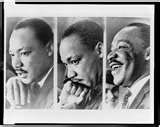
Dr. Martin Luther King, Jr.
There are many people in ancient and contemporary history that I would have loved to interview, one of whom was Dr. Martin Luther King, Jr.  But he was not the first on my list. I would have been overjoyed to interview Jesus the Christ one-on-one! I would have asked him about his childhood, his dreams, his future goals. I would have asked if he felt that his destiny was out of his control. I would asked his mother,The Virgin Mary, what kind of son he is. I would have asked her if she feels her son is a special kid who is destined for greatness? I would have asked The Virgin Mary if she sensed her son's life would be short, but forever lasting. I would have asked what her dreams were for her son.

No, I would not be crass and ask The Virgin Mary if she was a virgin when she gave birth to her son Jesus.

Because there are no magical time or travel machines, and no way to communicate with the deceased or historical notables–except in the movies and on TV–I had to find a way to bring Dr. King to me for an interview. Jesus is too large for me to imagine what he would say to direct questions.

I racked my brain about 10 minutes, maybe 15, trying to make magic happen without abracadabra incantations that would not solve my dilemma. Then lightning struck. My brain jumped into action. My plan: Read Dr. King’s speeches and quotes to fit the questions I want him to answer. Using his own words, I prepared my chance of a lifetime “interview” with Dr. Martin Luther King, Jr.

The more things change, the more they stay the same. That adage is true. Forty-four years after he was assassinated, Dr. King's words are just as relevant and forceful today as they were when he first spoke them during his lifetime. Even though he is gone his words are still repeated and recited by the young and old, Blacks and Whites, Americans and foreigners.


Dr. Martin Luther King, Jr. was born January 15, 1929. He was fatally shot by James Earl Ray as he and a few friends stood on the balcony of the Lorain Hotel in Memphis, Tennessee, April 4, 1968. He was in Tennessee to march with sanitation workers, whose incomes and working conditions were far below those of Whites working the same jobs. The workers and supporters carried signs that said: I AM A MAN TOO! For clarity, this "interview" will not focus on the protest in Memphis.

Dorothy: Dr. King if you could step back into history, mentally or physically, what time period  or time periods would you return to?

Dr. King:
I would take my mental flight by Egypt through, or rather across the Red Sea, through the wilderness on toward the promised land. And in spite of its magnificence, I wouldn't stop there. I would move on by Greece, and take my mind to Mount Olympus. And I would see Plato, Aristotle, Socrates, Euripides and Aristophanes assembled around the Parthenon as they discussed the great and eternal issues of reality.

But I wouldn't stop there. I would go on, even to the great heyday of the Roman Empire. And I would see developments around there, through various emperors and leaders. But I wouldn't stop there. I would even come up to the day of the Renaissance, and get a quick picture of all that the Renaissance did for the cultural and esthetic life of man. But I wouldn't stop there. I would even go by the way that the man for whom I'm named had his habitat. And I would watch Martin Luther as he tacked his ninety-five theses on the door at the church in Wittenberg.

But I wouldn't stop there. I would come on up even to 1863, and watch a vacillating president by the name of Abraham Lincoln finally come to the conclusion that he had to sign the Emancipation Proclamation. But I wouldn't stop there. I would even come up the early thirties, and see a man grappling with the problems of the bankruptcy of his nation. And come with an eloquent cry that we have nothing to fear but fear itself.


But I wouldn't stop there. Strangely enough, I would turn to the Almighty, and say, "If you allow me to live just a few years in the second half of the twentieth century, I will be happy." Now that's a strange statement to make, because the world is all messed up. The nation is sick. Trouble is in the land. Confusion is all around. That's a strange statement. But I know, somehow, that only when it is dark enough, can you see the stars.


Dorothy: When did you decide the direction your life might go?

Dr. King: I decided early to give my life to something eternal and absolute. Not to these little gods that are here today and gone tomorrow; but to God who is the same yesterday, today, tomorrow and forever.


Dorothy: How would you, a widely known leader, measure the spirit of man, being a spiritual man yourself?


Dr. King: The ultimate measure of a man is not where he stands in moments of comfort and convenience, but where he stands in times of challenge and controversy.


Dorothy: Can what affects one race of Americans, not affect another race, especially in the realm of justice?


Dr. King: Injustice anywhere is a threat to justice everywhere. We are caught in an inescapable network of mutuality, tied in a single garment of destiny. Whatever affects one directly, affects all indirectly.


Dorothy: Politicians talk a lot about science and its relationship to religion. What is your opinion? Are the two connected?


Dr. King: Science investigates, religion interprets. Science gives man knowledge, which is power; religion gives man wisdom, which is control. Science deal mainly with facts, religion deals mainly with values. The two are not rivals. They are complimentary. Science keeps religion from sinking into the valley or crippling irrationalism and paralyzing obscurantism. Religion prevents science from falling into the marsh of obsolete materialism and moral nihilism.


Dorothy: Dr. King, everyone is aware that you are nonviolent. But realistically, wouldn’t you achieve your goal for justice much faster by employing a hint of violence?


Dr. King: Violence as a way of achieving racial justice is both impractical and immoral. It is impractical because it is a descending spiral ending in destruction for all. It is immoral because it seeks to humiliate the opponent, rather than win his understanding. It seems to annihilate rather than to convert. Violence is immoral because it thrives on hatred rather than love. At the center of non-violence stands the principle of love. Love is not emotional bash; it is not empty sentimentalism. It is the active outpouring of one's whole being into the being of another.


Dorothy: How do you feel about discrimination?


Dr. King: Discrimination is a hellhound that gnaws at Negroes in every waking moment of their lives to remind them that the lie of their inferiority is accepted as truth in the society dominating them.


Dorothy: Once again America is at war after the 9/11 terrorists strike. We went to war in Iraq and Afghanistan, where we still are fighting. But these wars are different from Vietnam. Will there ever be peace in the world?


Dr. King: Sooner or later all the people of the world will have to discover a way to live together in peace, and thereby, transform this pending cosmic elegy into a creative psalm of brotherhood. I refuse to accept the view that mankind is so tragically bound to the starless midnight of racism and war that the bright daybreak of peace and brotherhood can never become a reality.


I refuse to accept the cynical notion that nation after nation must spiral down a militaristic stairway into the hell of nuclear annihilation. I believe that even amid today's mortar bursts and whining bullets, there is still hope for a brighter tomorrow. I still believe that one day mankind will bow before the altars of God and be crowned triumphant over war and bloodshed.


Dorothy: Did America damage its image with its involvement in the Vietnam war?

Dr. King: It is curious that Americans who calculate so carefully on the possibilities of military victory, do not realize that in the process, they are incurring deep psychological and political defeat. The image of America will never again be the image of evolution, freedom and democracy, but the image of violence and militarism.


Dorothy: How do you feel about defense spending as opposed to spending on programs to help America’s poor?

Dr. King: A nation that continues year after year to spend more money in military defense than on programs of social uplift is approaching spiritual death. The curse of poverty has no justification in our age. It is socially as cruel and blind as the practice of cannibalism at the dawn of civilization, when men ate each other because they had not yet learned to take food from the soil or to consume the abundant animal life around them. The time has come for us to civilize ourselves by the total, direct and immediate abolition of poverty.


Dorothy: Today many people appear to be brain dead, and willing to accept whatever is told to them without question. Why do you think that is?

Dr. King: Nothing in all the world is more dangerous than insincere ignorance and conscious stupidity.


Dorothy: Explain what the "drum major instinct" means.


Dr. King: Now the presence of the drum major instinct is why so many people are "joiners." You know, there are some people who just join everything. And it's really a quest for attention and recognition and importance. And they get names that give them that impression. So you get your groups, and they become the "Grand Patron" and the little fellow who is henpecked at home needs a chance to be the "Most Worthy of the Most Worthy" of something. It is the drum major impulse and longing that runs the gamut of human life. And so we see it everywhere, this quest for recognition. And we join things, over join really, that we think that we will find that recognition in.


Dorothy: How can America reroute the revolution of values in the midst of war?

Dr. King: America, the richest and most powerful nation in the world, can well lead the way in this revolution of values. There is nothing except a tragic death wish to prevent us from reordering our priorities so that the pursuit of peace will take precedence over the pursuit of war. There is nothing to keep us from molding a recalcitrant status-quo with bruised hands until we have fashioned it into a brotherhood.


Dorothy: In Birmingham you decided to take nonviolent "direct action". What was the purpose?


Dr. King: Nonviolent direct action seeks to create such a crisis and foster such a tension that a community which has constantly refused to negotiate is forced to confront the issue so that it can no longer be ignored. My citing the creation of tension as part of the work of the nonviolent--resister may sound rather shocking. But I must confess that I am not afraid of the word tension. I have earnestly opposed violent tension, but there is a type of constructive, nonviolent tension which is necessary for growth.


Dorothy: Were any of your direct-action campaigns ever well timed? Many Whites feel they were not.


Dr. King: Frankly, I have yet to engage in a direct-action campaign that was well timed in the view of those who have not suffered unduly from the disease of segregation. For years now I have heard the word ‘wait.’ It rings in the ear of every Negro with piercing familiarity. This ‘wait’ has almost always meant ‘never.’


Dorothy: In your own words, describe what is it like to be Black and living in America.


Dr. King: Being a Negro in America means trying to smile when you want to cry. It means trying to hold on to physical life amid psychological death. It means the pain of watching your children grow up with clouds of inferiority in their mental skies. It means having your legs cut off, and then being condemned for being a cripple. It means seeing your mother and father spiritually murdered by the slings and arrows of daily exploitation, and then being hated for being an orphan.


Dorothy: When you hear people say you are breaking the law in some instances when you hold demonstrations or marches, what is your response?


Dr. King: The answers lies in the fact that there are two types of laws: just and unjust. One has not only a legal but a moral responsibility to obey just laws. Conversely, one has a moral responsibility to disobey unjust laws. I would agree with St. Augustine that an unjust law is a human law that is not rooted in eternal law and natural law. Any law that uplifts human personality is just. Any law that degrades human personality is unjust.


Dorothy: During the early days of the bus boycotts, you received a threatening call around midnight, in which the caller said, ‘Nigger, we are tired of you and your mess now. If you don’t get out of town in three days, we’re going to blow up your house.’ Was that frightening for you and your family?


Dr. King: I could hear an inner voice saying to me, ‘Martin Luther, stand up for justice. Stand up for truth. And lo I will be with you, even until the end of the world.’


Dorothy: Does the prospect of death frighten you?


Dr. King: Death comes to every individual. There is an amazing democracy about death. It is not aristocracy for some of the people, but a democracy for all of the people. Death is the irreductible common denominator of all men.


Dorothy: How do you want to be remembered? What do you people to say at your funeral?


Dr. King: If any of you are around when I have to meet my day, I don’t want a long funeral. And if you get somebody to deliver the eulogy, tell them not to talk too long. And every now and then I wonder what I want them to say. Tell them not to mention that I have a Nobel Peace Prize—that isn’t important. Tell them not to mention that I have three or four hundred other awards—that’s not important. Tell them not to mention where I went to school. 'd like somebody to mention that day that Martin Luther King, Jr., tried to give his life serving others. I'd like for somebody to say that day that Martin Luther King, Jr., tried to love somebody.

 
The Lorain Hotel turned into a Civil Rights Museum
Dorothy: If I was slated to speak at your funeral, what would you like me to say?
 
Dr. King: I want you to say that day that I tried to be right on the war question. I want you to be able to say that day that I did try to feed the hungry. And I want you to be able to say that day that I did try in my life to clothe those who were naked. I want you to say on that day that I did try in my life to visit those who were in prison. 

I want you to say that I tried to love and serve humanity. Yes, if you want to say that I was a drum major, say that I was a drum major for justice. Say that I was a drum major for peace. I was a drum major for righteousness. And all of the other shallow things will not matter. I won't have any money to leave behind. I won't have the fine and luxurious things of life to leave behind. But I just want to leave a committed life behind. And that's all I want to say.
 
Dorothy: Thank you, Dr. King. I enjoyed the interview.


Dr. King: You're quite welcome.

Sunday, January 27, 2013

'Django Unchained', a Tarrantino movie that distanced itself from the true facts of slavery

I went to see Django Unchained a couple of weeks ago. I avoided critics and what others were saying about the movie. I wanted to get my own impression of Django Unchained. I love Jamie Foxx and Samuel Jackson, two characters in the movie. Having already watched a couple of Quentin Tarrantino movies I was prepared to see violence, and rough language

Taking a line from Langston Hughes’ poem, Mother to Son: “I’se still climbin’, And for me it ain’t been no crystal stair.” From my reading of history I knew that life for slaves was “no crystal stair.” Their life was nowhere close to what Tarrantino depicts in this movie. 

Jamie Foxx as Django,
wearing sunshades
I am not a regular moviegoer, so when I Goggled the word “Django” I was surprised to see that a previous Django movie was produced in 1966. The film, an Italian western, was directed by Sergio Corbucci.

Jamie Foxx is Django, whom we meet when he’s being transported with other slaves. He’s rescued by a German minded abolitionist and  bounty hunter named Dr. King Schultz (Christop Waltz), who schools Django in the ways of tracking down and killing men. 

Django becomes the Robin to his Batman, but he wants one thing in return: to go back to the Mississippi plantation where his wife, Broomhilda (Kerry Washington), is still enslaved and free her.

Christoph Waltz and Jamie Foxx in town
What caught my attention, soon after Schultz purchased Django from paddyrollers--was them riding into town. The town's people were aghast. A slave riding a horse like he was a free White man! And he was pistol strapped, wearing a hat and regular clothing!
 

Prior to coming to town Schultz and Django shot the paddy rollers, leaving captured run-a-ways to escape to a freedom. Django took clothes and boots off one the dead paddy roller. By coincidence they fit him. The time period was 1858, three years before the "Proclamation Emancipation" was issued by President Abraham Lincoln.

As a slave Django had no access to a barber; therefore, it was reasonable that his hair was nappy and bushy. In a scene following a quick shootout between Schultz and some gangsters wanted dead or alive, they went into the town’s barber shop. 

The owner did not make a fuss about serving a slave. He did not say, “I don’t serve no nigger slave in here!” Or “What you doin’ with that nigger slave in here?” Nor did he demand that they leave his shop. By the time the two left town that day, the slave was sporting a fade haircut! The carefully crafted fade was popularized by Black barbers. Also, remember this is 1858, and Foxx’s character had dropped his slave dialect.

Call me picky, but obvious dangler after dangler caught my attention, like Moses wearing a red wrist band in The Ten Commandments. But I digress. Schultz and Django went to Candyland, the biggest plantation in the South, where slaves called the DiCaprio’s character “Big Daddy”. Before riding up to the big house, Django spotted an overseer beating a slave. He quickly sprinted toward the overseer, snatched the whip and commenced beating him. He shoots the overseer six or seven times as slaves look on in admiration and amazement. 

Later in the movie, the KKK scene was pure comedy relief. Klansmen argued about the skewed eye cutouts in the cloth bags covering their heads. I didn't and don't understand what this particular scene added to the movie. Remember, the KKK was organized in 1865, soon after slaves were freed.

Throughout the movie, the soundtrack was absolutely contemporary music, including rap! I could not believe it! Tarrantino did not bother to write an original soundtrack for Django Unchained.

Calvin Candie played by Leonardo DiCaprio
Django learned to read quickly, and just as quickly, he evolved into an expert marksman. I stared in disbelief when one of Candie’s guests asked Django how he pronounced his name. The Foxx character told him, explaining that the “D is silent.” 

A slave with knowledge of silent letters! Not even White slave owners knew about consonants and silent vowels! Maybe Django learned it from one of those English books he was allowed to read, courtesy of his German rescuer.
 

One of Candie’s in-house female slaves (see photo to the left) was dressed in a short black and white uniform, replete with heels, black stockings, pressed hair, neatly styled and decorated with a big white bow. She stood in the doorway as two slaves fought for the pleasure of Candie and his male guests. The winner hits the loser in his head with a hammer, killing him. This happened as the loser lay on the floor, moaning from his wounds. 

Candie had demanded that the victor take the loser out of his misery. DiCaprio’s character gives him a hammer to complete the deed. This slave is later mauled to death by hunting dogs. The slave does not want to fight anymore, but that is not his decision to make. Candie talks him down out of the tree, promising he won't have to fight anymore, which was a lie.

In addition to the movie going against everything related to the brutality of bondage, male slaves wore t-shirts, regular shirts and pants and haircuts. However, they were barefoot. 

Finally, Stephen, the in-house Negro played by Samuel Jackson, comes on the scene when Schultz introduces Django to Candie, who instructs his help to treat Django like a “White man.” Of course, this surprises Candie's White guests and the slaves standing around. 

Sam Jackson is unadulterated Pulp Fiction, talking loudly and cursing strong. Like Django, he does not speak with a slave dialect. For some reason, Stephen hates Broomhilda, played by Kerry Washington. When Schultz and Broomhilda, (Django's wife) and the property of Candie, sneaked away for a moment of privacy, they converse in German (with subtitles), even though both can speak English. The three of them do not let on that she is Django’s wife, who Schultz plans to buy back from Candie.

Stephen is disrespected everyone in the dining room where Candie’s guests were dining. No way under God’s blue sky would a slave be allowed to rant, curse and bloviate like Jackson’s character. Such disrespect would have demanded a flogging to teach all the slaves a lesson about respect and knowing their place. In one scene, where Broomhilda is held at gun point by a slaver, an angry Stephen shouted at Django: “I don’t give a good goddamn about you! Believe that! We’re gonna blow this bitch’s brains out! Believe it!” Really, Tarrantino? Really, Sam Jackson?


Stephen (Sam Jackson) and
Broomhilda (Kerry Washington)
A gun fight breaks out inside the plantation. White men suddenly burst in the door. Bullets fly and all hell breaks loose. Blood sprouted from bodies like bleeding hydrants. Django survives, but is captured by an overseer, who hangs him upside down by his ankles in a barn, butt naked. 

The overseer was getting ready to castrate him when Stephen entered the barn, saving a scared Django.  He gets dressed and goes back inside the plantation, killing the overseer that captured him. Still angry, he shoots Stephen in both knees, before blowing up the plantation. Blow up, mind you! Not set the plantation on fire! However, there is a subsequent fire due to the explosion. The movie ends with Django and Broomhilda on horses, both elaborately dressed.   

Django Unchained did not resemble the true horrors of slavery in America. It was too 21st century for me. Maybe I was looking for too much reality to take the movie seriously. It did well at the box office and in many cases, got good reviews from critics. There is even talk of an Academy Award. I have to agree with Spike Lee, despite my going to see the movie. Django Unchained was akin to a spaghetti western that disengaged itself from the horrors of slavery and the plight of imported Africans who lived the horrors up close and personal.

Saturday, December 29, 2012

David recalls the hospital visits: 'We always arrived at the shocking center much too soon'


The Extraordinary Life of An Ordinary Man
by David Delahoussaye

“When I was seven years old I wanted to stop growing. I wanted to remain seven and 
not become an adult. I wanted everything to stop changing. I did not
 want to have all the responsibilities with which grown-up were hampered.”

Chapter 1 

The good Lord spared my life the first time when I was four years old. I contracted a serious case of diphtheria. Diphtheria can be a fatal disease. I think the I came up with the malady is by messing around with some chickens. I would sneak under the house to play with those cluckers, spending a lot of time there. I found these creatures quite interesting. I was fascinated by the way they drank from the puddles of rain water that accumulated underneath the house. We humans use a dipper or a glass to drink. These birds, however, had quite a different way of quenching their thirst. One would lower its beak into the puddle, take a small sip, raise its head as high as possible, and then finally swallow the small amount of water that was taken in. This procedure had to be followed several times.
The scary, twisted face of mental illness

I was thrilled whenever I had the opportunity to see a number of my [fowl] feathered friends perform this ritual simultaneously. Some of the heads would go down, while others went up. Up. Down. Up. Down. They were a live carousel of hens. I would giggle with glee at the delightful sipping symphony.

Naturally, sometimes I would pretend I was a chicken, and I was very thirsty. I would get on all fours, lower my lips into a puddle and take a small sip. After stretching my neck toward floor of the house, I would finally swallow. Up and down I went. I was a chicken. And, so, it was speculated that this was how I contracted diphtheria.

The symptoms of this illness were difficulty in breathing, high fever and a sore throat. I did not know the word for breathing, so I complained to Mama. "Mama, I can't go like this!" I wheezed as I labored to breathe. The first doctor that saw me misdiagnosed my condition. However, when Dr. Orien Dalton initially saw me, he knew it was diphtheria.

I was hospitalized until I was better. The one thing I remember about the hospital was my first encounter with a hamburger. One night Daddy brought a hamburger to Mama for supper. When Mama unwrapped the still-steaming sandwich, and unfamiliar, yet mouth water aroma tantalizingly flooded my sense of smell.  "What's that?" I asked Mama excitedly. "It's called a hamburger," she answered. While passing me a generous portion, she said, "Try a piece."  Well, that was just the most wonderful food I had ever tasted. It was unfortunate I could not eat much solid food at that time. I felt as though I could eat at least five of those savory sandwiches all by myself.

After returning home from the hospital, my ordeal was not yet over. I had to remain in bed, and the entire house was quarantined. Mama and Daddy stayed, but Grandma, Carol and Lorita were forced to leave in order to stay with Mama's parents, who lived just down the road. After a while, I was allowed visitors inside the house, but not inside my room. Lorita was one year old then. I remember Mama would lay a chair down across the entrance of my bedroom so we could see each other. Loreet, (my sister's nickname) meanwhile, would try to crawl through the chair to play with me. She would reach toward me with her little hands and cry out of frustration.

The time finally arrived when I could leave the bed and then eventually go outside. God had healed me through a young doctor named Orien E.  Dalton. By the mercy of God I had my while life ahead of me again. I was certain my relatives prayed for my healing, but at four years of age, I knew very little about our great and almighty God. It would not be until the age of 32 that I would realize God's powerful healing grace throughout my life. 
 
Chapter 4

Well, many are called, but few are chosen. I would neither be a missionary priest nor a diocesan one. That summer, only a few weeks after I graduated, I was stricken with an emotional illness. I feel that it was God telling me He had not chosen me to become a priest. Realizing that once a seminarian became mentally ill, he was never allowed to pursue the priesthood any longer. I was completely devastated and that made my emotional start worse.

I spent about two months at the state mental hospital in Pinesville, Louisiana. My stay there was a most horrifying experience. After I was there a couple of days, I ran into Timmy. Timmy was a cousin who married one of Mama’s sister. I had just come to the hospital a couple of weeks before with my aunt, Nora. We had come to visit her husband, Timmy. You talk about coincidence! But was that one? Timmy was just as sedated as I was, and he had very little to say. That did not offer very much encouragement. I did not understand what was happening to me.

To amuse themselves (David was now a patient at the same mental institution) late at night, the technicians would drag me out of bed, and antagonize me into wrestling and fighting with them. They had themselves a good old time taking turns manhandling me, and tossing my heavily drugged body around like a big rag doll. Once, when I was tied down to my bed, wrists and ankles, two patients came into my room. One was an older man with a pot belly, and the other was a teenager. They were supposed to be on a laundry run. Well, they took turns slapping me in the face until they became bored. When they left my face was covered with blood.

The absolute worst ordeal I went through was those series of electrical shock treatment I was forced to undergo. Back then, in 1965, shock treatments were administered in its early, crude form. A considerable amount of voltage was used. I rode a small bus with other patients to where the so-called “treatments” were performed. There was a look of fear in everyone’s eyes during the bus ride, and no one spoke a word as we were being hauled to hell.

We always arrived at the shocking center much too soon. Inside, they strapped me down securely on a table. I do not recall [them] ever giving me any sedatives—they may have. In any case, I was always awake and aware of everything going on around me. There was a long row of tables with a hapless victim atop of each one. The torturers started on one end with that cursed machine of theirs, and worked their way toward the other end. When they were two beds from me I would turn my head slightly, and witness this horrendous spectacle. I would see them hold the electrodes on either side of the unfortunate sufferers’ head. They would then turn on the switch of that fiendish instrument. The poor person that was being electrocuted would immediately go into uncontrollable convulsions.

This horrifying scene reminded me of the way those chickens writhed and tossed in agony after Grandma had cut their heads off so we could have them for dinner. As the electricity shot through the pulsating patient, it seemed that his body would levitate above the table at times. The patient could not scream to vent some of the pain, because a large, rubber mouthpiece had been installed inside his mouth to prevent him biting off his own tongue.

By the time the “electrocutioners” got to me, I was in an extreme state of terror. I moaned and sobbed loudly as I rolled my head from side to side in a pool of my own tears. I knew how excruciating the pain would be, but I was helpless to do anything. All I could do was stiffen my entire body in anticipation of that dreadful, initial surge. I bit down hard on my mouthpiece, tightly closed my eyes and hoped and prayed that I would live through yet another one those tortuous shocking sessions.

When I got zapped, all I could do was grunt and squeal. The pain from this inhumane shocking of my brain was truly unbearable. Thanks be to God that I would fall into a state of unconsciousness before I suffered too long. On the bus ride back our quarters I felt like a limp, lifeless dish rag. For the longest, tormenting hours, I was forced to endure the most severe headache imaginable. What seemed like many days afterwards, when my condition had improved some, I was given the liberty to walk around the grounds. It was a blessed relief that those shivering shock treatments had finally come to an end. I sincerely enjoyed my newly found freedom. I felt almost like a human being again. While walking I started getting in touch with the spiritual part of myself. In my young life I had never really done this before, even when I was in the seminary.

This spirituality began to grow bigger and bigger until one day I was convinced that I was Jesus Christ. I suppose I had gotten in touch with the real Jesus within myself, but I had gone to extremes. I became obsessed with finding a priest with whom I could discuss all of this. I wanted to ask a priest whether I was Jesus Christ. After wandering around the entire day, I finally came upon the chapel, and the priest who ministered to the patients at the hospital. “Father,” I asked him in dismay, “Am I Jesus Christ?” In a kind, gentle voice, he replied, “No, my son. You are not Jesus Christ.” A great burden was lifted from my soul at that moment.

One day, by the grace of God, I was released from the mental hospital and allowed to return home. However, for about two months I was like a zombie. I had neither the inclination nor the energy to do anything. All I did was watch television all day and all night. One day, praise the Lord, I just snapped out of my deep depression and rejoined the human race. I had truly been blessed by God. I was touched by His healing grace.

This is a true story. David was first hospitalized for mental illness when he was 16, and diagnosed as a manic depressive. He spent a number of years in and out of mental institutions. His depressison is controlled with the medication Lithium. In his book God is the center of David's existence, who he talks about more than he does his wife, who suffers the same illness. He used a pen name to protect his privacy.
 

The Extraordinary Life an An Ordinary Man is self published© by David Delahoussaye, 1999-2000, printed by Princess Press, Austin, Texas. photo by dorothy charles banks