Friday, June 10, 2011

The 1981 random lynching that bankrupted the United Klans of America

March 21, 1981. 

Michael Donald, 19, came from a loving family despite his parents being divorced. He was the youngest of seven sisters and brothers, all born to Beulah Mae and David Donald. A teenager who liked playing basketball with his friends, Donald, dressed in blue jeans, a light-colored shirt and a blue jeans jacket, had no way of knowing what awaited him in the darkness that night as he walked home.     
   
Donald had gone to a neighborhood convenient store to 
Michael Donald
purchase a pack of cigarettes. His mother said smoking was his only vice. She did not like his smoking, but Michael felt that because he was enrolled in trade school, he was old enough to smoke.

Smoke was coming from a cross burning on the Mobile County Courthouse lawn, March 21, 1981. The Ku Klux Klan was piss hot mad about a verdict that they did not agree with. A "nigger" killing a White cop on their watch? Hell no! That was backwards!  There was no way they were going to let that stand! The first trial of Joseph Anderson ended in a mistrial. Angry, the sought revenge.

Fate can sometimes be cruel. It can be sneaky and quiet. That night March each of Michael Donald's steps took him closer to an untimely, horrific death. His family and friends would not see him alive again after that innocent trip to a local convenient store.
 
Born in Mobile, Alabama, July 14, 1961, Donald was enrolled in a technical college. He wanted to be a mason. He finished high school and was working part-time in the mailroom at the Mobile Press Register before he was senselessly murdered. His "random" death was later deemed a hate crime. The African American teenager had no way of knowing that he, an innocent citizen of Mobile, Alabama would become a symbolic target of hate and revenge, randomly selected for execution by U. S. born and raised terrorists living in one of America's the Deep South states.

Between 10:30 and 11:30 P.M., Ku Klux Klan member Henry Frances Hays, 25, and James  “Tiger” Knowles, then 17, drove around in the Black community, searching for a single Black person. They were angry and any potential Black victim they came across would satisfy their aim to kill in an act of revenge.

The United Klans of America (UKA) had a notorious reputation for intimidating Blacks in the South long before the lynching of Michael Donald. During the civil rights movement the group beat Freedom Riders in 1961; shot to death civil rights worker, mother and wife Viol Liuzzo in 1965 as she drove down the highway, bombed Birmingham's 16th Baptist Church, killing four little girls and three boys in 1963.


The KKKers tricked Micale Donald, the lone teen into approaching their car, asking him the location of a night club. When he was close to the car, one of them pointed the gun at Donald, ordering him to get into the car. Prior to her son's death Beulah Donald had dreamed about a casket in her living room. The male lying in the casket wore a gray suit. A mother's premonition? Perhaps.

"Mrs. Donald drank two cups of coffee and moved to her couch, where she waited for the new day. At dawn, Michael still wasn't home. To keep busy, she went outside to rake her small yard. As she worked, a woman delivering insurance policies came by. 'They found a body,'  she said, and walked on. Shortly before 7 A.M., Mrs. Donald's phone rang. A woman had found Michael's wallet in a trash bin. Mrs. Donald brightened - Michael was alive, she thought. 'No, baby, they had a party here, and they killed your son,'' the caller reported. 'You'd better send somebody over.'

"A few blocks away, in a racially mixed neighborhood about a mile from the Mobile police station, Michael Donald's body was still hanging from a tree. Around his neck was a perfectly tied noose with 13 loops. On a front porch across the street, watching police gather evidence, were members of the United Klans of America, once the largest and, according to civil rights lawyers, the most violent of the Ku Klux Klan organizations. 

"Less than two hours after finding Michael Donald's body, Mobile police would interview these Klansmen. Lawmen learned only much later, however, what Bennie Jack Hays, the 64-year-old Titan of the United Klans, was saying as he stood on the porch that morning. 'A pretty sight,' commented Hays, according to a fellow Klansman. ''That's gonna look good on the news. Gonna look good for the Klan'.''  (The New York Times, November 1, 1987)

After beating Donald to death, they showed off his body at the house of the Klan elder Bennie Hays before hanging him from a tree.

The Alabama police department conducted an investigation into the lynching. Investigators quickly concluded that the teenager was involved with drugs. He was killed in a drug deal that turned deadly; they postured without proof. Beulah Mae Donald told the police that her son was not involved with drugs. She even allowed them to search Michael's room. She was not having any of the nonsense talk that her deceased son was involved with drugs.  

Beulah, believing that she was not going to get justice for her murdered of son, started working Mobile's Black community to organize rallies, hoping to attract attention that finally caught the attention of civil rights activist Jesse Jackson, and some other noted activist came to Mobile to help. Three men were arrested but not charged. They were released with no action pending. The Mobile police department dragged its feet. The case was destined for the cold case file. It took three years to finally arrest the culprits. By then the FBI had begun an investigation.


Teenage lynching victim Michael Donald
Thomas Figures was an attorney for United States under the thumb of Republican Jess Sessions. As a senator he represented Mobile. 

"As an act of appeasement to me--or to convince me that a second investigation would come to the same conclusion--I was allowed to work with a second F.B.I. agent, James Bod-man," Figures recalls.

"I'll never forget the first things Bodman said. He asked me, 'Why the hell do you want to reopen this can of worms'? But then he got interested in it, and we worked on it every day. We had lunch together, we talked at night--people started calling us 'the odd couple'". (The New York Times)

"In a sense, they were. Both are from the deep South. Figures is Black and Bodman is White". 

Figures's insistence paid off. Results was forthcoming. In 1983 James "Tiger" Knowles made a full confession to Bodman. He admitted that he participated in violating Michael Donald’s civil rights. He rolled on Hays to save himself.

At a March 18, 1981 Ku Klux Klan meeting called by Bennie Jack Hays, the Exalted Cyclops, and the father of Henry Hays. The discussion centered around the random killing of an African American as payback if Josephus Anderson, a Black criminal, was not found guilty of killing a White policeman.

Hays said to the gathering: "If a nigger can get away with killing a White man, we ought to get away with killing a nigger".

Klans member Frank A. Ginocchio concurred and said, "We gonna kill a nigger!" When the not guilty verdict was announced the Klan stepped into action. They did not wait for the retrial, which subsequently ended with a guilty verdict. 

An interracial grand jury of 11 Blacks and one White could not come to a unanimous decision. The trial of Josephus Anderson ended in a mistrial. His trial had been moved to Jefferson County because of a world wind of interest and publicity. Anderson had shot and killed a White cop in Alabama. The prosecutor said there would be a new trial. In 1985 Anderson was  convicted for killing the cop after two more mistrials.

June 22, 1983 a special Mobile Grand Jury indicted Henry Hays for the murder of Michael Donald. It took two-and-a-half years to arrest and indict Hays and all others involved with the murder. Hays trial lasted from December 6 through December 10. At his trial the KKK member testified that when they were scouting for a Black victim, Donald “seemed like a good victim, and no one else was around. I asked him if he knew where a nightclub was, and he started to direct me. I asked him to come closer, and I pulled a gun out. Donald was yelling in the back of the car, acting like a crazed madman".

After kidnapping Donald by gun point the duo hightailed it to the next county to a desolate area, where they carried out their brutal crime of revenge. During Hays trial it was learned that Donald begged them not to kill him. He attempted to escape but to no avail. Hays said Knowles chased after the scared teenager, hitting him with a tree branch, stunning him, knocking him to the ground. They beat him, cut his throat and strangles him.  The teens face was reportedly battered and bloody, his lips swollen beyond their normal size. His clothes were covered in dirt or dry mud.

Hays and Knowles drove to house of Klan elder Bennie Hays to show him the body. During an early morning hour, they hanged Donald’s body on a camphor tree close to a sidewalk on Herndon Avenue. They used the nylon rope they procured from Frank Cox's mother's house. Knowles tied the hangman's knot at the end of the rope. They had borrowed a gun from Klan member Johnny M. Jones, but they did not shoot Donald.

According to a wrongful death lawsuit filed by Morris Dee of the Southern Poverty Law Center, "Hays and Knowles took the unconscious body of Michael Donald to Henry Hays' house on Herndon Street, showing it to defendant Frank Cox between the hours of midnight and 5 A.M.".

During the joint discussion (March 18), defendant Bennie Hays told James Knowles and Henry Hays not to do anything
Body of Michael Donald, the noose still around his neck
until after Friday because he was selling his apart-ment located on the same street. Hays did not want any distractions that would deter the sale of his apartments.

Klan members rejoiced about their achievement. Standing on Hays' porch, Knowles, and Teddy Kysar watched the police collect whatever sparse evidence they could discover at the second crime scene. Kysar said to Knowles, "Good job, Tiger".

The local newspaper headline read: Man Found Hanged on City Street. Sam Jones, an African American and mayor of Mobile was on the scene when Donald’s body was cut down. A collection of people stood by watching until his body was placed in an ambulance.

In the lawsuit Beulah Donald vs United Klan of America, it was noted that the purpose of the random killing was twofold: "First, to intimidate present and future jurors in Mobile County and Alabama from ruling in favor of Black defendants charged with crimes against Whites, or in favor of Black defendants seeking to recover damages from Whites, thereby denying Black citizens their right to a fair and impartial trial; and second, to show the strength of the [United] Klans, and to show [Blacks] that [the United Klans was] still here in Alabama, thereby intimidating and threatening Black citizens who would attempt to exercise their right to vote, to equal employment, to equal justice, and to life, liberty and the pursuit of happiness as guaranteed by the federal and state laws. These actions on the part of defendants Henry Hays and James Knowles were done to carry out the plan of defendants identified and set forth in paragraph 27 above, to kill a Black person should the jury trying Joseph Anderson not find him guilty."
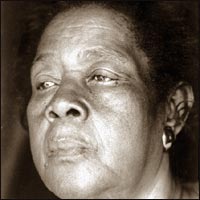
Beulah Mae Donald
To avoid the death penalty Knowles rolled on Hays and his fellow Klansmen, cutting a plea deal with the prosecution. He was the D. A’s star witness against his partners in crime. Though Knowles avoided “Yellow Mama”, the nickname for Mobile’s electric chair, he was sentenced to life in prison. However, for the sake of his safety he was put into custody of the United States Justice Department. He agreed to testify against the Klan in upcoming cases. 

When Knowles got a chance to address the jury at his trial, he said: "I've lost my family. I've got people after me now. Everything I said is true. I was acting as a Klansman when I done this. And I hope people learn from my mistake. I do hope you decide a judgment against me and everyone else involved."

Turning to face Beulah Mae Donald, Knowles said: "I can't bring your son back. God knows if I could trade places with him, I would. I can't. Whatever it takes - I have nothing. But I will have to do it. And if it takes me the rest of my life to pay it, any comfort it may bring, I hope it will".

Beulah Mae Donald said to Knowles: "I do forgive you. From the day I found out who you all was, I asked God to take care of you all, and he has." It took the jury 30 minutes to award Donald a $7 million judgment against the United Klan of America, including all the property the organization owned.

The grieving mother said she did not want revenge. She just needed to know the reason for them killing her son. ''I wanted to know who all really killed my child. I wasn't even thinking about the money. If I hadn't gotten a cent, it wouldn't have mattered. I wanted to know how and why they did it.''  In 1987 The New Times named Beulah Donald "Woman of the Year."

 
March 28, 1981 Beulah Donald attends the funeral of her murdered son, Michael. She insisted the casket remain open because she wanted everyone to see what they did to her son. She died in 1988.


A Mobile Grand Jury composed of 11 whites and one African American indicted Henry Frances Hays for murder. He pleaded innocent, saying Knowles “framed him.” At his son’s trial, The Guardian reported that a defiant Bennie Hays declared, “To get me they got my son. I had a nigger . . . I mean a black man come up to me and ask why I wear a cover. He knew I was in the Klan. Everyone in the hall knew I was the Klan. I don’t hide it. I got nothing to be ashamed of.”

A couple of years later Bennie Hays was charged with conspiracy to kill Michael Donald.  When he went on trial February 1988, he was 71 years old. He collapsed in the courtroom about 15 minutes after listening to Knowles testify; his second day on the stand. The old man died of a heart attack in a Biloxi V. A. Hospital before he could be retried. 

On December 10, 1983, Henry Hays, the son of Bennie Hays, was sentenced to life in prison. Judge Braxton Kittrell, Jr. rejected the sentence in 1984. He ruled that Hays should be executed. In 1986 the Alabama Court of Criminal Appeals set aside the death sentence.  However, the Alabama Supreme Court upheld Judge Kittrell’s decision. Hays sat on death row for 16 years, appealing his sentence, asking for clemency. He was executed in Alabama’s electric chair June 6, 1997. It was the first time since 1913 that a White man was put to death for killing a Black man, and the first Klansman to be executed for killing a Black man in the 2oth century.

Frances Coleman wrote in the Mobile Register, 1997: "June 6 will be a sad day for Alabamians, whether their skins are white, black or brown. On that day -- the previous night, really, at 12:01 a.m. -- the state of Alabama will electrocute Henry Francis Hays for beating a black man to death 16 years ago, and then hanging his body from a tree.

"The execution will rip the scab from the old, deep, nasty wound of racism, which in the 20th-century South alternately heals and festers. It will fester again this week as residents of the Heart of Dixie re-live the brutal death of 19-year-old Michael Donald.

"It is a story of contrasts: The murderer, a white man, grew up in a home filled with hate and violence. The victim was reared by a loving mother and doting older siblings.

"Henry Hays knew what he was about that night, when he and a friend set out to kill a black man. Michael Donald, on the other hand, was innocently walking up the street on a spring evening in Mobile to buy some cigarettes, when fate delivered him into the white men's hands.

"Most vivid, though, is the contrast between fiction and reality. Michael Donald was murdered, beaten to death with a tree limb-- not in the 1930s or '40s, even in the 1960s, but in 1981. Such things weren't supposed to happen almost 30 years after the Supreme Court declared "separate but equal'' unconstitutional, and nearly 20 years after the Civil Rights Act of 1964.

"Nor were they supposed to happen in Mobile, which in the 1960s had somehow managed to avoid the racial violence that erupted in Selma and Birmingham.

"Black men kidnapped and beaten, their bodies strung up in a tree? That was something that happened on the dark back roads of Dallas County or over in the Mississippi Delta, not in Alabama's second-largest city. But hate crimes aren't constrained by time, place or suppositions. The reality is that Michael Donald died just 16 years ago at the hands of two Ku Klux Klansmen. So what if his death came years after lynchings were supposed to have ceased, and in a place not known for such things?"

Beulah Donald sold the Klan headquarters for $52,000 and bought a home. That was all the money she ever received from this homegrown terrorists group, that was more poor than rich. The wrongful death lawsuit bankrupted the United Klan of America, Inc. The lawsuit closed the book on this case February 1987. Beulah Donald died in 1988 of natural causes in a Mobile hospital. She was 67. Her victory was seen as the hammer that nailed shut the coffin of the KKK in Mobile and Tuscaloosa, Alabama.

In 2006 Mobile changed Herndon Avenue to Michael Donald Avenue at the urging of Mayor Jones and the city council. Donald's night of terror was relived in a novel titled Like Tree, Walking by Ravi Howard. Also on National Geographic, Donald's story was revisited in 2008 in a piece titled Inside American Terror. 

Thursday, June 9, 2011

Form of expression

Form of expression

tiny drops
of crystals
pouring down like rain

are the tears
from my eyes
which for so long
I have fought
while trying to remain
the sunshine
of a smile

but the darkened
cloud of thoughts
covers the beauty
of gladness

the mind
doesn't believe what
the heart actually
feels

so here I sit beneath
the umbrella of hope
waiting for you

My Sun

to once again  rise
with the radiant rays
of love and desire


copyrighted 1980 by T. Lloyd

20th Century Baby

20th  Century Baby

20th century baby
Conceived and born
In War

Millions of your
Brothers killed
While you were just
A boy

For not until you
Came to life

That war became so real
For men talked not
In terms of life 
They talked of
OverKill

They went from 
Stick and Stones
And broke many bones
From arrows 
And the gun

So by the time
You were born

They had moved
To the Bomb
But you're not to blame

Oh child of Space

You're just an actor
A stage
And when the bullets
Of War pierce
Your heart
Time
Will
Turn
Another page


copyrighted by Hezekiah Edwards
       

Creflo Dollar steamrolls his congregation

Rev. Creflo Dollar
In a steamrolling sermon that sounded more like “don’t you dare desert me if I  have a wreck”, Creflo Dollar, pastor and CEO of World Changers Church International recently chided, criticized and confronted his own congregation in his zest to defend, and show absolute support for his friend Bishop Eddie Long of New Birth Missionary Baptist Church in Atlanta, Georgia. Over a year ago Long was accused of sexually taking advantage of four young male parishioners, all of whom filed a lawsuit against the flamboyant mega-church bishop.

Bishop Eddie Long
Died January 15, 2017
Long proclaimed his innocence, saying he would leave his fate in the hands of God. It looked like his congregation was going to stick with him in the beginning when the sexual rumors were more speculation than factual. When the rumors turned into truth, some of Long’s members left the church. 

Reportedly, Long has settled the lawsuits out of court, a promise he did not keep to himself or to his congregation. He said he would fight the lawsuits. He would be David and the four young men were Goliath. He had faith that he would win the courtroom battle. Somewhere along the way he had a change of heart.

Creflo Dollar, his sarcasm dripping with resentment, is very unhappy with Long’s members who abandoned the bishop because of the sexual scandals. He let Long’s members know that they are not welcome at his church. He did not want their membership.

The transcript below is testimony to Creflo’s angry. It was shocking is to hear his congregation laugh and applaud his scolding and manipulation of their devotion to him. He warned if he had a “wreck”, and they treated him the same way as Long’s congregation did him, God would punish them, and send them to hell. His "wreck" would be forgiven, but God would not forgive  Long's fleeing congregation. Creflo's sermon was geared at making his congregation feel guilty in advance, just in case he finds himself in trouble. I listened to him with my mouth open in disbelief.

The Creflo Dollar transcript

With the church, when you have a wreck (his reference to getting in trouble) you expect for God to forgive you and everybody else. Don’t let the preacher have a wreck now. When you become self-righteous and you become judgmental, and you gonna leave the preacher for his wreck, when you done had more wrecks . . . (the congregations applauds) . . . the preacher was still anointed to do what he was called to do, he just had a wreck. The blood will take care of his issue just like it will take care of yours. And I just can’t believe that people would leave their preacher ‘cause he had a wreck (applause) instead of praying for him (continued applause).

When I pray I don’t have a wreck that you’ll leave me cause I’m gonna get up in your face. . . I’ll . . . I’ll . . . forget you then! I’ll tell you about yourself! (applause). I mean . . .the pastor . . .he’s loved them, taken care of them, he’s given to’em, he done that and he done that, and now okay, so he had a wreck! We had some wrecks. I’m thinking man, the mercy God showed on you, and you couldn’t show it to the preacher? And the gossip that’s in the body of Christ over a preacher that had a wreck? He had a wreck! He’s a good man! Here’s the good news, he got his shoes! (loud applause of agreement).

Oh, you clap your hands now (getting angry) But let me have a wreck! I want to see how many of you “Negroes” gone still be here! (sustained laughter and applause). Okay. How many of you precious saints of God . . . See we love to be religious, but some of the same people in here clapping their hands hoping  I have a wreck just so they can say I told y’all so! See there! He wasn’t that perfect! I ain’t never told you I was perfect! You ought to know that (scattered applause). 

There are certain thing s that I have grown from and shouldn’t ever do, but if I have a wreck! I’m still gone go to heaven! Now you might mess some stuff up base on how you treat me! (applause) See the preacher in the city here, he’s still gonna go to heaven! He’s cleansed! He’s alright! And if you from that church that you gone talk about and you gone try and join here, I don’t want you to join here! (loud applause) You need to go and join where you supposed to be! (the megachurch erupts with approval of Creflo’s statement) I don’t want you here! That is my friend! That is my brother in the Lord! (applause and shouting hasn’t stopped)

If you came from there, you get on back over there where you supposed to be and do what you supposed to be doing! (his statement was for the benefit any of Long’s members who might have been in the audience. The applause grows louder and extended) Because he’s got insurance, and Jesus paid the premium! Hey! His insurance is paid up! (deafening applause and mumbling) He’s still going to heaven. Still gone be anointed and do what he was called to do. And if you don’t sit in the seat God will send somebody else to take your place. And then look at how you handle it. That’s the hypocrisy of the whole thing. Like you was flawless.

That man took them people...raised’em up, taught’em hot to tie they tennis shoes...all that kind of stuff. Who do we think we are?  See that’s when it’s testy. It’s not testy when you sitting in a seat, and everything is okay, and you’re saying “hallelujah, praise the Lord.” Let’s live this. Let’s live it. Forgive the thing that you say you can never forgive. Let it go! Forgive that relative you said “I ain’t never gonna speak to them.”  You ain’t doing nothing but hurting yourself.

I know it’s painful. I ain’t trying to take the pain out of it or the disappointment and all that, but at the end of it, you gotta act like Jesus. Ain’t nobody put you on no cross, beat you with a cat of nine tails. Oh, my gosh . . . imagine how he felt.
 “Peter, you know him?”
“I don’t know him.”
“I thought I saw you with him the other night?”
“Blink blink, I said I didn’t know him!” (extended laughter)
And imagine how he (Jesus) felt and he sitting right there, and he said, “Aw, man. You denying me? I thought you was my boy. You denying me?”

But you don’t know how it hurts. Sometimes you playing a game of football and you get into it, you gotta play hurt. 

Surely Creflo is not comparing Long to Jesus. His congregation slowly backed away from him because he is accused of molesting young men in his church. 

Monday, June 6, 2011

So you think you're smarter than a 5th grader?

THE PRESIDENCY OF THE UNITED STATES QUIZ

Are you sure you’re smarter than a 5th grader?  If you think you are, take this presidential quiz without cheating. Because this site is not equipped to hide answers before the quiz is completed, I will publish the answers next week. Good luck

1. To be president of the United States, a candidate must be a natural born citizen of the U.S., 35 years of age and have lived in the U.S. for14 years.

A. True
B. False
C. Don’t think so
D. All of the above

2. In 1951 how many terms could a president serve?

A. 8 years
B. 4 years
C. 6 years
D. 12 years

3. Who were the first presidents to serve full terms as president?

A. Dwight Eisenhower
B. Ronald Reagan
C. Bill Clinton
D. George W. Bush
E. All of the above
F. Not sure

4. How many years was Lyndon Johnson eligible to serve as president after the assassination of John F. Kennedy?

A. 4 years
B. 6 years
C. More than 8 years
D. None of the above

5. To be elected president a candidate must receive a majority of electoral votes, or if no candidate receives a majority, the President and Vice President are chosen by the House of Representatives and Senate, respectively, as necessary.

A. True
B. False.
C. Don’t think so

6. “I do solemnly swear (or affirm) that I will faithfully execute the Office of President of the United States and will to the best of my Ability, preserve, protect, and defend the Constitution of the United States.” How many presidents preferred to say “affirm” rather than “swear”?

A. One
B. Two
C. Four
D. None

7. When is the State of the Union Address delivered?

A. June
B. October
C. January

8. What president first called his presidency a “bully pulpit”?

A. John f. Kennedy
B. George W. Bush
C. Theodore Roosevelt

9. Which of these presidents was first to be born after WW l?

A. Ronald Reagan
B. Bill Clinton
C. Jimmy Carter
D. Richard Nixon

10. What was the reason George Washington refused to take his annual salary of $28,000?

A. He wanted it donated to charity
B. He demanded more
C. He was a successful businessman
D. None of the above

Saturday, June 4, 2011

Longevity and clean living have been friends to 101-year old Martha Coleman

Martha Coleman, 101 years old
The game show Jeopardy is a favorite past time for Mrs. Martha J. Coleman. She watched the show intently while I interviewed her. Her two-pronged concentration was amazing, given the fact that she is 101-years old. Mrs. Coleman not only paid close attention  to the game show, she didn't miss a beat in her response to my questions! Her concentration was better than that of some younger individuals that I've interviewed.

Mrs. Coleman is the absolute living proof that age does not have to be an enemy. Soft spoken and quick to smile, she  stays active by attending the same  church  she has frequented for 60 years. She goes to Sunday School and stays through 11 a.m. service. On Tuesdays and Thursdays, Mrs. Coleman says she goes to a nearby senior citizens center to quilt and socialize.
   
Learning to cook at age seven, Mrs. Coleman earned a living at that profession for over 30 years. She said she crochets, is an avid embroider and sews in addition to quilting. “I can do most anything,” Mrs. Coleman said with pride.

She was born in Waters Park, 11 miles from Travis County City Limits, June 5,1905, with the help of a midwife. Mrs. Coleman was one of 13 children born to Archie and Mariah Adam. Some of the children were born with the help of a doctor. Her parents were sharecroppers, who planted cotton and picked it to earn a living.

A widow, Mrs. Coleman is the only survivor of the 13 Adam children. Her mother died at age 95; her father at 85. She said her father was not a healthy man, but he had to “work real hard because he had a houseful of children.” When all of them left home, the majority moved to various states to live. Two sisters stayed in Austin.

Keeping on eye on Jeopardy while talking to me
Mrs. Coleman married Andrew Coleman when she was 20. They were together for 55 years. They had  no children, but she raised two of his sons from a previous marriage. She also helped her sisters with their children.

“I’ve always been around children; I’ve always taken care of children,” Mrs. Coleman said. She says staying busy keeps her young in spirit.
   
A petite woman who appears to be in good physical health, Mrs. Coleman said that was not always the case. At an early age she suffered through, and survived two deadly diseases: malaria and typhoid fever, the latter caused by an outside water system that attracted mosquitoes, she said.

“People back then drank water out of system. We didn’t have no well. We had a system on the side of the house, and when it rained the water run in the system. I loved to drink rain water. My parents tried to keep me from drinking it. One day when they wasn’t home I slipped and drank some. Mosquitoes had got in it. I got typhoid fever after that. I was a sickly child ever since.” She remembers being 10 or 11 years old at the time.
   
Mrs. Coleman said she was cured without the doctor ever seeing her in person. She went to bed one night and woke up later with a high fever. The right side of her body was paralyzed; her right arm was frozen in place, lying limp on her chest, she recalled.

Mrs.  Coleman said her leg was stiff and straight. She could not move. She stayed in that condition for a week. Her parents "doctored" on her with home remedies, but none of them improved her condition. Mrs. Coleman said her parents did not realize how close she was to death.
   
Her father finally called Dr. E. W. D. Abner, telling him that he was bringing his daughter to his office. Dr. Abner was a prominent “colored” practitioner, Mrs. Coleman said. He was one among a few "colored" doctors to treat “colored” people in Austin Travis County. 

Dr. Abner told her father not to bring her to his office. Instead, he would make a home visit. Dr. Abner said he would charge her father a dollar a mile when came to their home in Waters Park. The mode of transportation back then was a horse and buggy.  Living 11 miles outside the city limits of Austin Travis County was considered “living in the country.” Mrs. Coleman says her father could not afford the dollar-a-mile trip. 

“Dr. Abner told my father to just come on in (by himself) and tell him about my condition. I feel like I know what’s wrong with her,” Dr. Abner told her father. He had treated other patients with symptoms identical to Martha. Dr. Abner gave her father a prescription to fill and instructed him to administer the medication every hour.  Dr. Abner instructed her father to call him the next morning, letting him know if Martha's fever had broken.
   
“So he did that. The next morning my fever was gone. Dr. Abner told my father to come back and get another prescription. That’s the way he doctored on me. He never did see me. He had two or three patients in the condition I was in. He lost one and one was paralyzed for life,” Mrs. Coleman said, realizing how lucky she was.
   
“I  had malaria when I was nine. After that I was sick all my younger years,” Mrs. Coleman recalls. Laughing, she said she got all of  "my sickness out the way while I was young."
   
When she started Summit Public School in Waters Park, Mrs. Coleman says she graduated seventh grade, the highest grade at the school. She enrolled at Anderson High School, but did not graduate because her father could not continue paying the room and board for her to stay in the city. So she went to live with a cousin.
   
“When I  turned 17 I felt I was grown. I realized I didn’t want to take away from the children at home. I quit school and went to work. I had two little brothers younger than me, and they were real smart. I wanted to give them a chance to go to school,” Mrs. Coleman said.   

Her brothers went on to graduate from Anderson High School. Mrs. Coleman found work cooking and keeping house for a physician and his family. A country girl at heart, Mrs. Coleman says she did not like living in Austin, calling it “a nice little town.”
   
Raised going to church, Mrs. Coleman said she liked the movies “a little bit”and going to the carnival. Dancing was not an activity that appealed to her. She enjoyed being “around church people” because that’s who she was most comfortable with. Besides that she loved living in the country where most Black folk lived.
   
“I found living in the country more enjoyable than the city. Seemed like it was nicer. We didn’t have to go through so much,” Coleman said.
   
As a child she and her family did not see the racism in Waters Park that they saw in Austin. Mrs. Coleman says she did not see it in her neighborhood. “I didn’t go around them in Austin. Where we lived in the country, White folks were very nice to us.”
   
Mrs. Coleman said her secret to a long life is simple: “I just live a common life like everybody else. I just treat others like I want them to treat me. I try to live right.”

Thursday, June 2, 2011

The silence of these walls are stiffling me

The silence of these wall are stifling me

A  true story 
by Ellen Jackson
Write/Poet

"The silence of these walls are stifling me." That's a line from a poem I wrote. I, like millions of Americans, never gave much thought to my five senses, even though I wear glasses, which really is a common everyday thing.

The question is, what is deafness? Deafness is usually defined as the inability to hear. There is no legal definition of deafness, and experts do not completely agree on when to use the term. In most cases, however, it refers to the inability to hear and understand speech. Hearing specialists makes the distinguish between deafness and hearing impairments. People with impaired hearing can hear and understand at least some speech.

I fall in the impaired hearing category. After losing 50 percent of my hearing at age 30, I was in an isolation that only another deaf or impaired person could understand.

Let me try to get you to imagine what it would be like not to hear the familiar sounds of water running, music, television, the telephone, the doorbell ringing, cooking (boiling water, frying meats, etc.) I never imagined what looking at television without hearing was like until I lost my hearing. I've been a soap opera fan since childhood, so it was a chilling experience when I couldn't understand my favorite shows. These are the things we take for granted.

My loss of hearing was caused by medications known as "Genamycum" and "Neomycin". I was very sick, and it was the choice of my husband and mother to decide whether I lived or not.

To imagine what a deaf or impaired person goes through is to stay in a room in absolute silence. Try to stay for an hour, or at least half an hour. Then you will know how more than a million hearing impaired people go through life each day. There is absolutely no sound. You have to rely on your other senses: smell, touch, feel (vibrations), taste. 

There are adjustments to make, and they are great. I, for one, am lucky to have a loving husband who answers the phone, the door and makes calls to friends, even though I write to a lot of them. Also I have an understanding boss and co-workers who make my job a lot easier for me.

There are a thousand little things the hearing impaired have to cope with; even with a hearing aid. They are helpful in some cases, so is speech reading, also referred to as lip reading and sign language. Speech reading is very difficult to learn even for the impaired. It has its advantages, like in my case of developed speech. But certain words can throw me off, especially distinguishing sounding words.

Short of wearing a sign that says I'm deaf or am impaired hearing, one of the problems I have  is that individuals don't speak facing me. That is a definite drawback. But I now have new interests like writing poetry, a revived interest in reading and sewing. However, I still miss a lot of the old things.

The old saying that "silence is golden" is a myth if I ever heard one! Try telling that to a deaf person and see what reaction you get.

Wednesday, June 1, 2011

Life is so somber, life is so tranquil

Clarence Kemp
Life is so somber, life is so tranquil

Time is predestined
A countdown to one's death
An involuntary pace is set
With each and every breath

I'd like to be where time stands still
Where each moment is a dream
Life is so somber, life is so tranquil.
Is it closer than it seem?

Man has locked himself to time
And the chain cannot be torn
Funny, we begin to die
From the moment we are born

I'd like to be where time stands still
A place where I may rest
Life is so somber, life is so tranquil
Where time is but a jest

But time deserves a little praise
For all wounds it is said to mend
And yet, like any countdown
Time too must have an end

I'd like to be where time stands still
So that we could be together
Life is so somber, life is so tranquil
Forever and ever and ever


(C) 1979 by Clarence Kemp


Untitled 2

Let's see. . .

there's one Ayatollah
2 Shahs
one hundred
corrupt Politicians
in the Senate alone
to say nothing
of the House
of Representatives

three million soap opera addicts
Details at 10

four million lobbyists
and no telling
how many
Commie Sympathizers

meanwhile Bethlehem Steel
has made a move
to merge with the
  Holy Mother Church
that is 

Six Scientologists

Statistics reveal:

You don't even exist 
In your very own
living room
while Nine Nazis
parade around 
the back of your mind

the Revolution will not only
be televised 
but is now
available on 

Long Playing Records

Eight track Tapes

Video Cassette

and Special Disco Length

just when
you thought you'd scream
along comes
weather report 
1969
what a year!

10 Thousand Bucks
and I could get out
of this daily business

eleven or twelve
billy beers
later
I awaken to more
distressing news
 and the end
is not in sight

copyrighted by Clarence Kemp